
Strategies to Catalyse Safe, Efficient, and Reliable Decentralised Water Reuse in Bengaluru
Photo by Nabina Chakraborty
Bengaluru has adopted a unique approach to solving water scarcity and pollution. It mandates buildings above a certain size to treat their sewage on-site and reuse the treated wastewater. As a result, the city now has over 3,500 decentralised sewage treatment plants (DSTPs), which treat approximately 17% of the city’s wastewater.
This presents a significant opportunity. Mapping Bengaluru’s potential demand for treated wastewater based on domestic, commercial, and industrial use revealed that the city could currently reuse up to 615 MLD of treated wastewater. By 2035, this figure could rise to 1,073 MLD—almost three times current levels—providing up to 25% of the city’s water needs. This would position Bengaluru as a global leader in innovative urban water solutions.
However, many DSTPs have inadequate technology and suffer from neglect, so the treated water is not consistently safe or reliable for reuse. The core challenges are not technology-related, but also social; they comprise e.g. the lack of sustainable and profitable business models, unclear modalities for treated water transportation, or lacking financial and regulative incentives that ensure the long-term maintenance of DSTPs. To overcome these barriers, the WaterReuseLab project was launched. It adopts a systemic lens on
these challenges and developed a strategic planning process through a series of workshops with key stakeholders in the sector.
Work Package 1: Technology
Work Package 2: User Acceptance
Work Package 3: Business Models
Work Package 4: Governance
Work Package 5: Stakeholder Interaction
Read More | How We Can Make Bengaluru’s Water Systems More Sustainable and Affordable
The first workshop explored the challenges in water treatment and reuse in the city, and how these could evolve in the future. It adopted a scenario planning approach to develop three distinct alternative future states for how the city—and by extension, its water situation—might evolve by 2030. The first two scenarios assumed that urban and economic growth would continue along their current trajectory, leading to worsening water scarcity. The first scenario imagines utilities joining hands with private players to
collectively overcome the worsening water scarcity. The second scenario assumes that utilities continue to be overwhelmed by the growth and citizens begin to build or buy homes in water self-sufficient neighbourhoods. The third scenario was less optimistic in terms of economic growth. It envisions the city’s growth plateauing and industries leading water reuse as a response to global mandates and norms.
The second workshop explored different configurations in which decentralised water reuse could develop in each of these scenarios. The 50/50 model envisages equal on- and off-site reuse of treated wastewater. This configuration has the highest overall scaling potential across various future scenarios, but also faces the most complex barriers, such as unreliable logistics, unclear water quality standards for off-site use, and the need for extensive actor coordination. The My water, my control configuration involves 100% on-site reuse, which would require higher quality treatment. This makes it a high-cost, niche solution providing 24/7 water self-sufficiency. The Naya Neeru (new water) configuration of 100% off-site reuse would perform best under the future scenario, in which industrial demand is high. However, it would rely heavily on pipeline networks, which are currently not available.
Read More | What We Learnt from the Water Reuse Project in 2023
All three configurations also face cross-cutting systemic barriers: a lack of consensus on water quality standards and pricing, weak communication between the government and private actors, the absence of affordable, real-time effluent quality monitoring, and a lack of financial support and subsidies.
By the end of the second workshop, participants had a comprehensive overview of the potential scenarios, configurations, and barriers for developing safe, efficient, and reliable water reuse solutions. Based on this assessment, they developed and prioritised concrete action items that could help improve the scalability of decentralised water reuse solutions. At the top of the list was developing a local water reuse coalition comprising civil society members, researchers, STP firms, and regulatory officials. This coalition could induce a shift from today’s fragmented interventions to push water reuse to a more coordinated and strategic
system-building approach. The document outlines a first suggestion on how such a coalition could be structured and built up and outlines potential action items to be taken up in specialised task forces.
Read More | Bengaluru’s Wastewater Market Experiment: A Promising Solution for Water-Scarce Cities Globally
Overall, the report shall provide a concise overview of the potentials and challenges in developing a more coordinated approach to supporting decentralised water reuse. By systematically implementing some of the proposed interventions, Bengaluru could unlock the full economic, environmental, and social potential of its decentralised water reuse systems and cement its role as a global reference point for sustainable urban water management.
We are currently working on a state of wastewaster in Bengaluru report, insights from which will inform the third workshop.
Fill these details to access the publication
Acknowledgements
Authors Christian Binz, Shreya Nath, Cheshta Rajora, Sofia Aalbu, Johan Miörner, Eberhard Morgenroth, Gayathri Muraleedharan, Deepthi Nagappa, Abishek Narayan, Sneha Singh, Shashank Palur, Hari Prasad, Shreya Trikannad, Bernhard Truffer, Lena Xue, Nadja Contzen, Josianne Kollmann.
Layout and Formatting Syed Saad Ahmed
Results All project results and outputs are accessible on eawag.ch/waterreuselab and welllabs.org/urban-water/
Suggested Citation Binz, C., Nath, S., Aalbu, S., J., Miörner, J., Morgenroth, E., Rajora, C., Muraleedharan, G., Nagappa, D., Narayan, A., Singh, S. Palur, S., Prasad, H., Trikannad, S., Truffer, B., & Xue, L, Contzen, N., Kollmann. (2025). Strategies to Catalyse Safe, Efficient, and Reliable Decentralised Water Reuse in Bengaluru: Insights From Two Stakeholder Workshops Under the WaterReuseLab Project. Eawag and WELL Labs.
Follow us to stay updated about our work
Related Posts
Related Posts
-
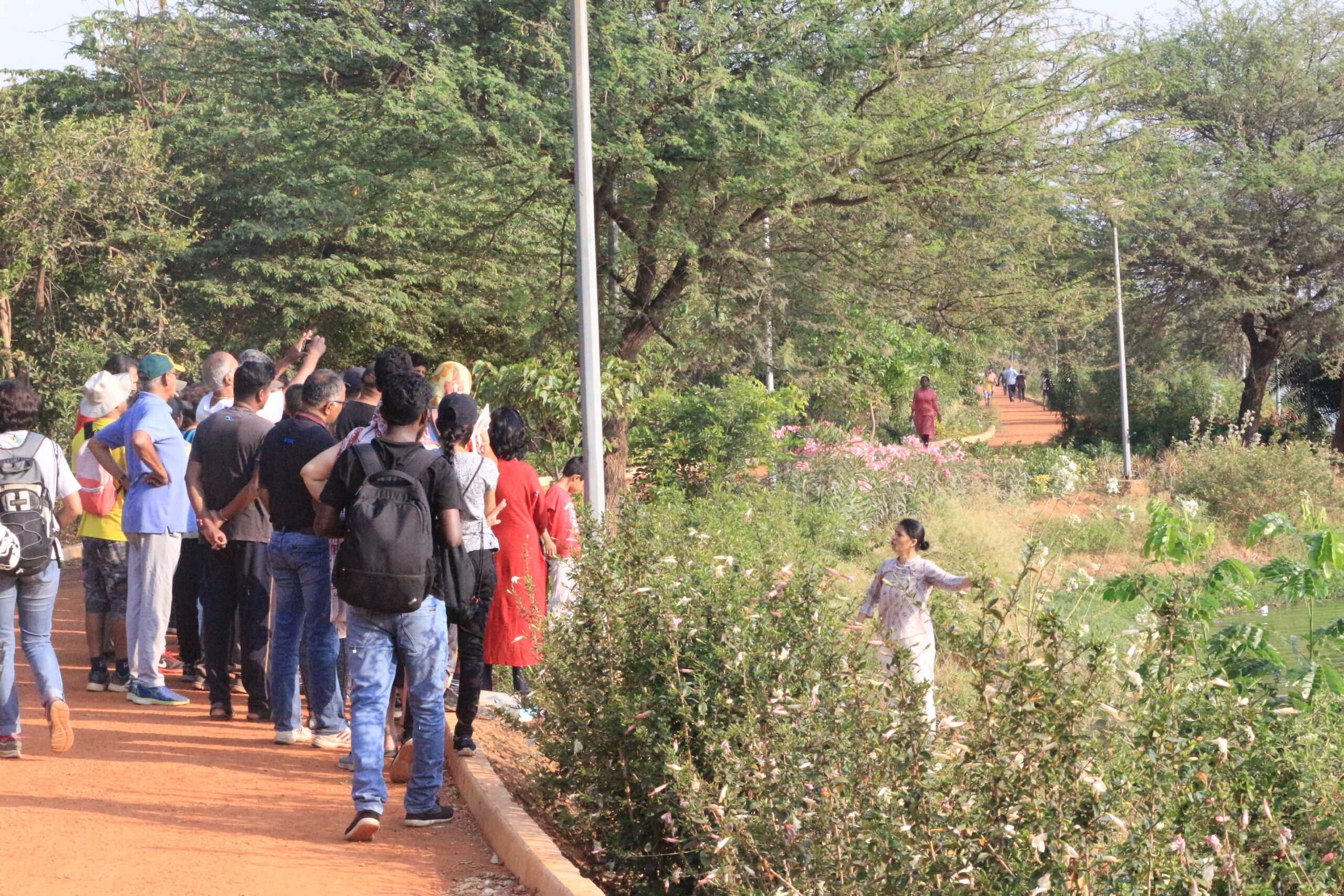
Bangalore’s Lakes: What Role do Citizens Play?
This publication is the third in a multi-part series on lakes that aims to provide a comprehensive overview of lake-related problems in Bangalore and approaches to address them. It describes the cr...
-
Lake Governance: The Pathway Forward
Indian cities are grappling with an ever-growing freshwater demand due to rapid urbanisation and exponential population growth. The treatment of the resultant wastewater has proved equally challeng...
-
Pathways for Building Climate Resilient Cities
Many Indian cities are already vulnerable to climate change. The financial damage from extreme events, like floods, heat, and drought is likely to be staggering. The urban poor will bear much of th...
-
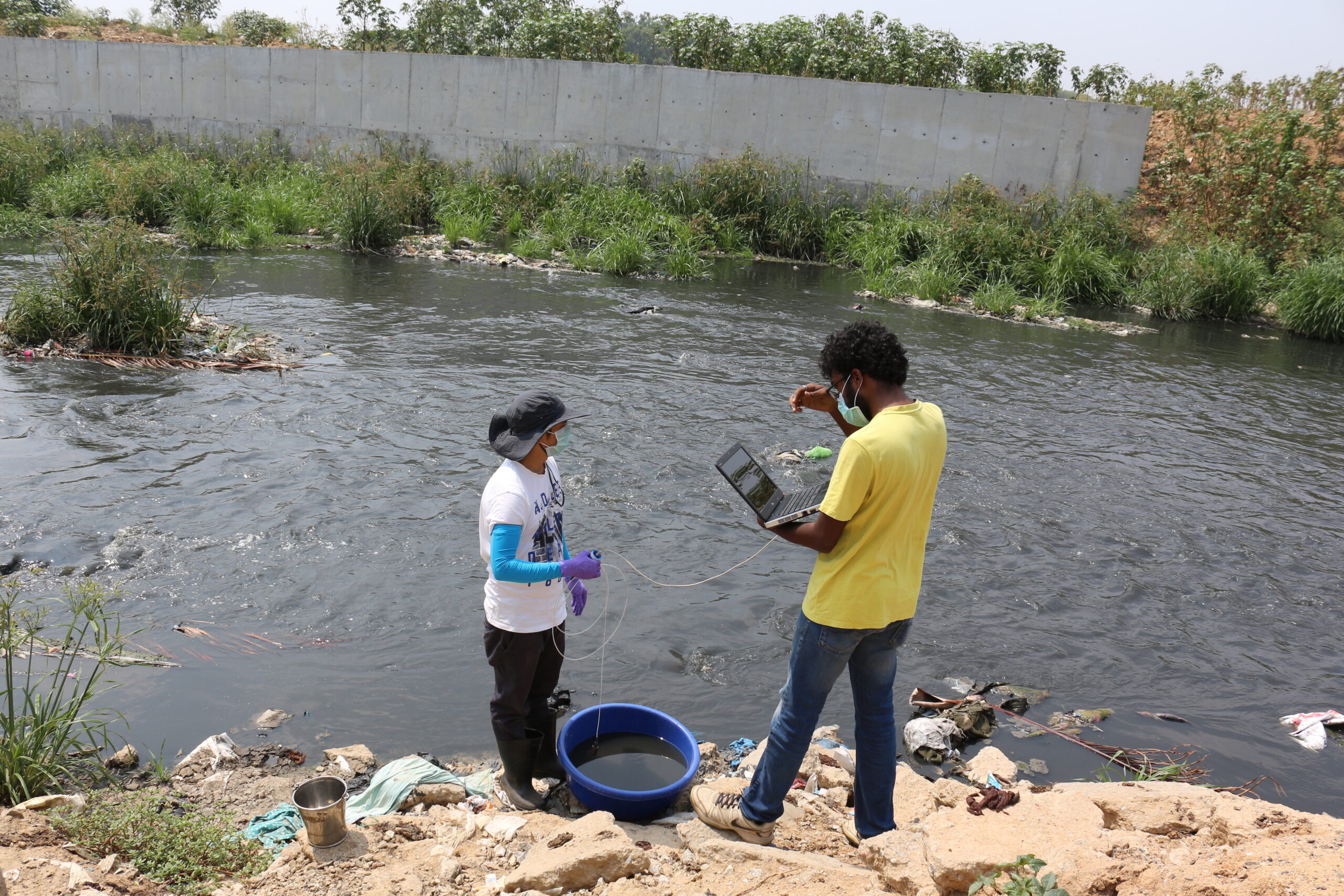
How Do We Manage Nutrient Levels in Urban Lakes?
This article is the sixth in a multi-part series on lakes that aims to provide a comprehensive overview of lake related problems in Bangalore and approaches to address them. This article discusses ...
-
Challenges and Opportunities in Residential Decentralised Wastewater Treatment and Reuse in Bengaluru
We explore the potential of decentralised sewage treatment plants, which are being promoted in cities like Bengaluru, to treat sewage at the source of generation
-
Phosphorus Balance Study at Jakkur Lake
We conducted a phosphorus balance study to understand the sources and sinks of phosphorus in Jakkur lake