
Designing Climate Resilient Futures in Raichur
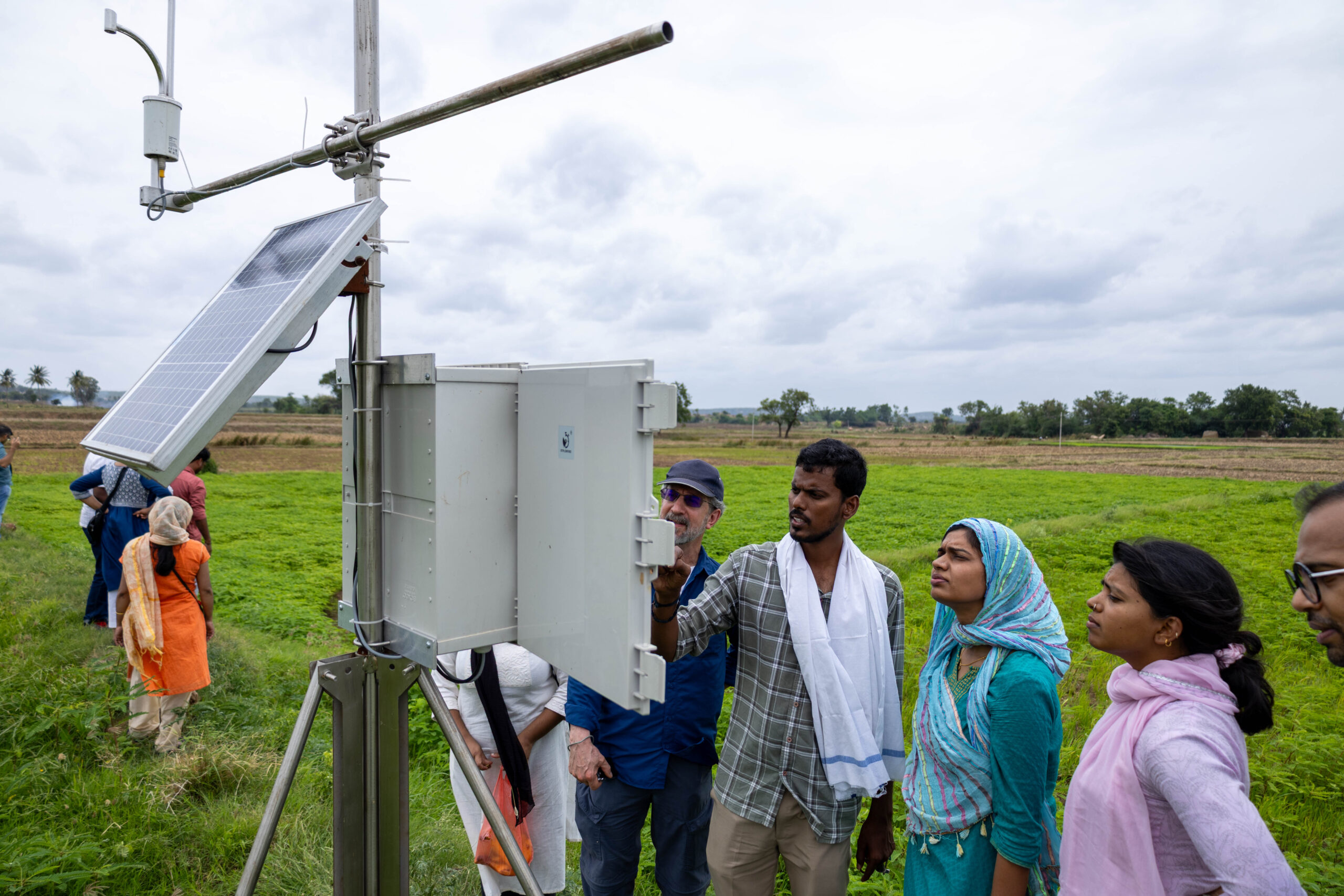
Raichur’s agricultural and water systems are being shaped by interventions from government institutions, NGOs, and agrarian communities themselves | Photo credit: Nabina Chakraborty
Across India’s rain-scarce interiors, districts like Raichur in northern Karnataka face a compounding set of pressures: climate variability, water stress, and agrarian distress. Building resilience in such places will not be defined by a single route, but through a collaborative process of navigating and managing the trade-offs between multiple, co-existing pathways – some desirable, some not – to intentionally design a more robust and equitable future.
What is a Pathway?
A pathway is a distinct trajectory of how a place or system could develop over time, shaped by a particular combination of choices, conditions, and priorities. It is not just an end state, but the unfolding sequence of decisions, adaptations, and consequences that lead toward a particular kind of future. In Raichur, these pathways are not abstract. They are already being walked.
Raichur’s Context: Water, Climate, and Agriculture
Agriculture is the primary livelihood in the hot, dry landscape of Raichur. With temperatures soaring above 40° C in summer, an annual rainfall of approximately 650 mm, and high interannual variability, farming is challenging and vulnerable to extreme climate events, market fluctuations, and degrading natural resources, such as soil and available groundwater.
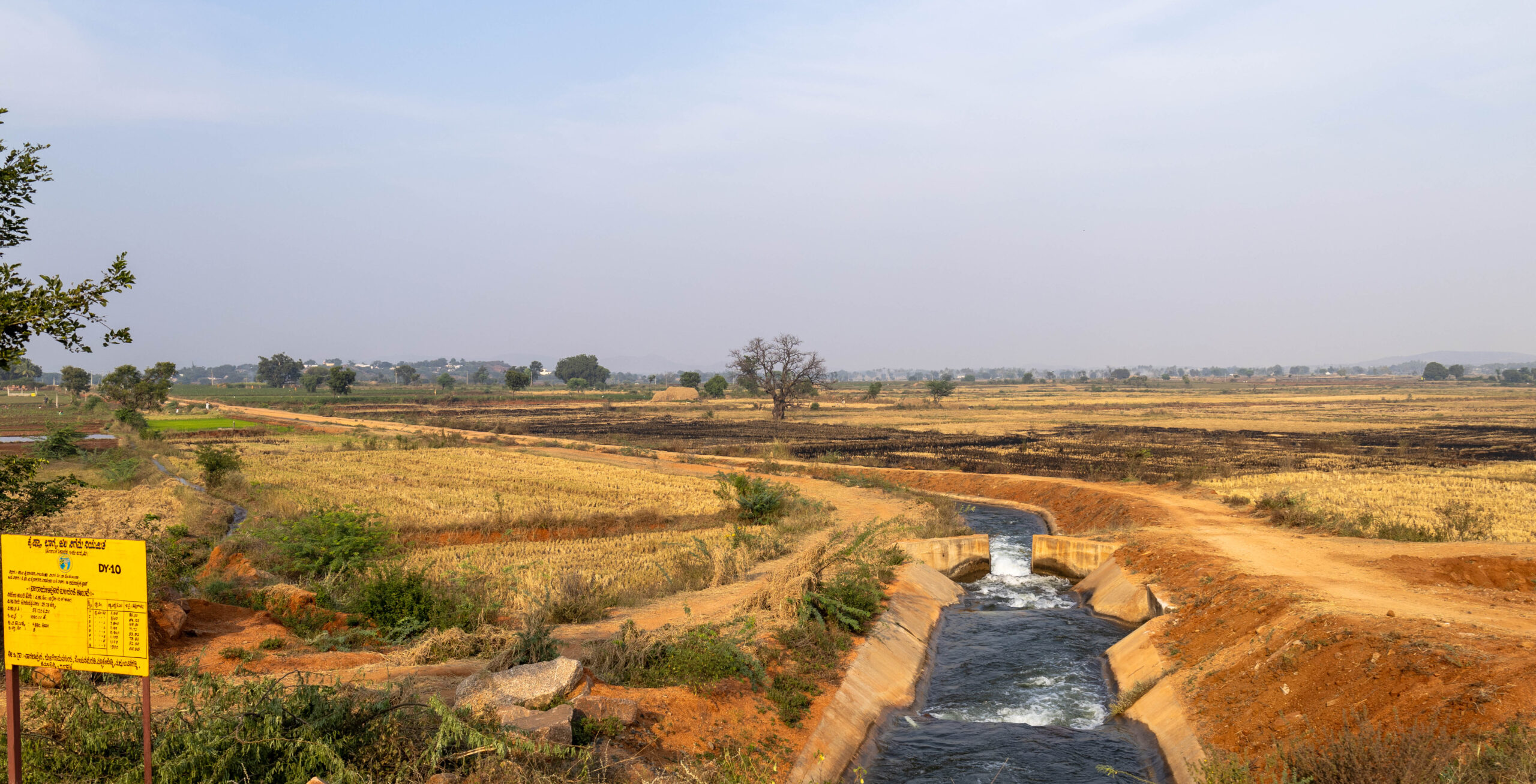
Irrigation from the Basava Sagar Reservoir (previously called Narayanapura Dam) has alleviated water stress to an extent. However, it has led to other issues: at the head-end reaches of the canal network, farmers receive a disproportionate and near-constant flow of water, leaving fields waterlogged and locking them into paddy as the only viable crop. At the tail-end reaches and the rainfed areas beyond, the opposite problem persists: continuing water scarcity and a lack of protective irrigation.
In response to these compounding pressures, Raichur’s agricultural and water systems are being shaped by interventions from government institutions, NGOs, and agrarian communities themselves. The future of Raichur is, thus, being dynamically shaped by what we might call ‘hydro-social pathways’: self-reinforcing trajectories that emerge from the interplay of water, policies, institutions, and social aspirations.
Seven Pathways: Current Realities and Emerging Trends
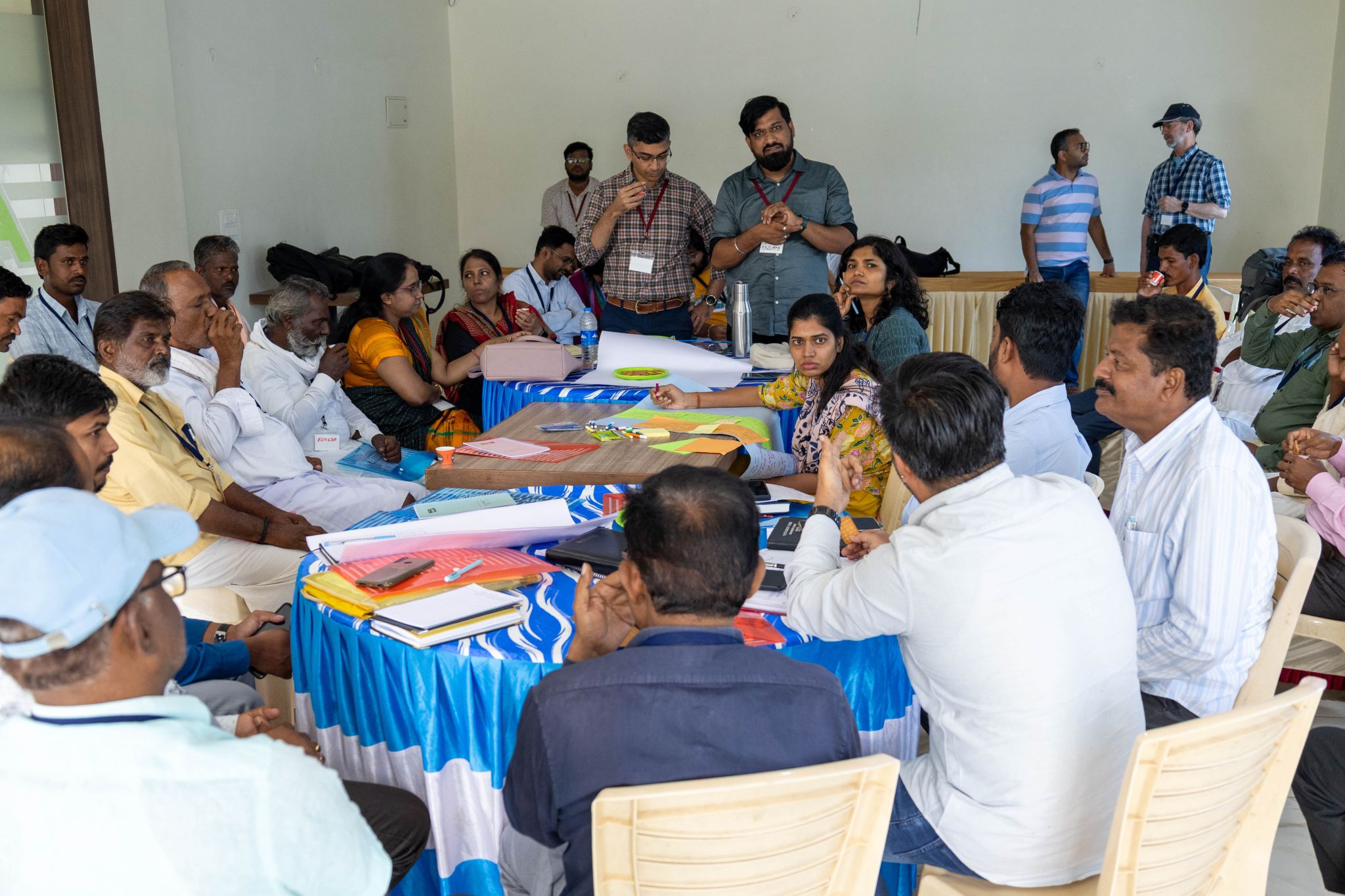
WELL Labs and Prarambha hosted a visioning workshop in July 2025 to envision Raichur district in 2047. Photo credit: Nanditha Gogate
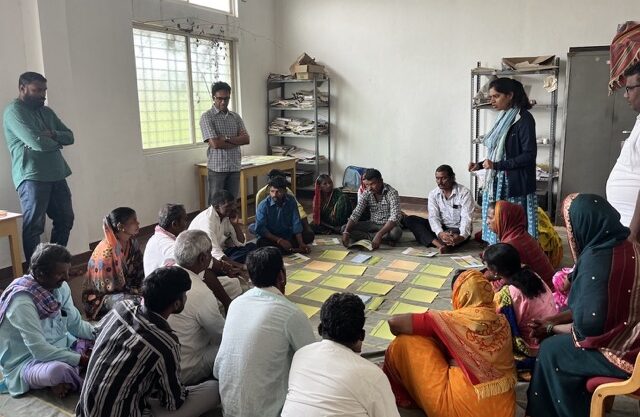
Aspirations mapping through ‘Raichur Jigsaw’ in January 2026. Photo credit: Sukanya Deepak, Thumbi Labs
In July 2025, WELL Labs and Prarambha conducted a visioning workshop titled ‘Raichur 2047: Imagining Flourishing Futures’ for the various stakeholders in the region. In January 2026, we hosted the ‘Raichur Jigsaw’, a participatory, game-based tool designed by Thumbi Labs to capture future aspirations from different farmer groups. Based on the discussions and insights gathered, seven hydro-social pathways were identified.
Read more | A detailed report on Raichur 2047: Imagining Flourishing Futures
The first three describe current, dominant realities in Raichur:
- Head-end regions dominated by paddy, with inefficient canal water distribution: The excess and poorly-controlled flow of canal water, combined with procurement policies and subsidies that favour paddy, leaves farmers with little choice but to grow the water-guzzling crop, while those at the tail-end struggle with scarcity.
- Middle and tail-end irrigated regions with diversified, water-intensive crops using conjunctive water sources: Farmers supplement limited canal water with groundwater from dugwells or borewells, giving them greater flexibility to diversify their crops.
- Unirrigated tail-end and rainfed regions with subsistence farming: Farmers depend on a single season of rainfall, face the sharpest exposure to climate risk, and are most likely to resort to distress migration when harvests fail.
The next four are forward-looking, describing narratives based on emerging trends and insights from the above discussions:
- Canal command area with upgraded infrastructure and continued water-intensive crop production: A State-led push to modernise and automate canal infrastructure addresses current inequities in water distribution, but risks reinforcing the same paddy-dominated lock-ins if not accompanied by broader policy changes.
- Tail-end and rainfed areas with competitive groundwater extraction and water-intensive cash crops: An unregulated race to drill deeper and cultivate water-intensive cash crops boosts incomes in the short term, but drives long-term groundwater depletion and deepens inequality between those who can afford to drill and those who cannot.
- All of Raichur with diversified agriculture and rural livelihoods through conjunctive water use: An ecologically sensitive, equity-oriented vision in which farmers cultivate diverse crops supported by stronger market linkages, while households supplement farm income with off- and non-farm livelihoods, building resilience across the district.
- All of Raichur with growing urbanisation and expansion of the service sector and industries: Rising aspirations for education, mobility, and non-drudgerous livelihoods drive a gradual shift away from agriculture, reshaping water demands and social structures across the district.
These pathways are not mutually exclusive. Raichur’s future is hybrid by default, and the challenge is not about choosing one best pathway but about negotiating among them, recognising their trade-offs, and deciding which ones to elevate. The two figures below illustrate this through two contrasting scenarios, both beginning with an equal split of households under the three current pathways, but diverging under different interventions and conditions. In scenario 1 (Figure 1), diversified rural livelihoods emerge as the dominant pathway. In scenario 2 (Figure 2), infrastructure-led intensification coupled with urbanisation and land consolidation takes hold instead.
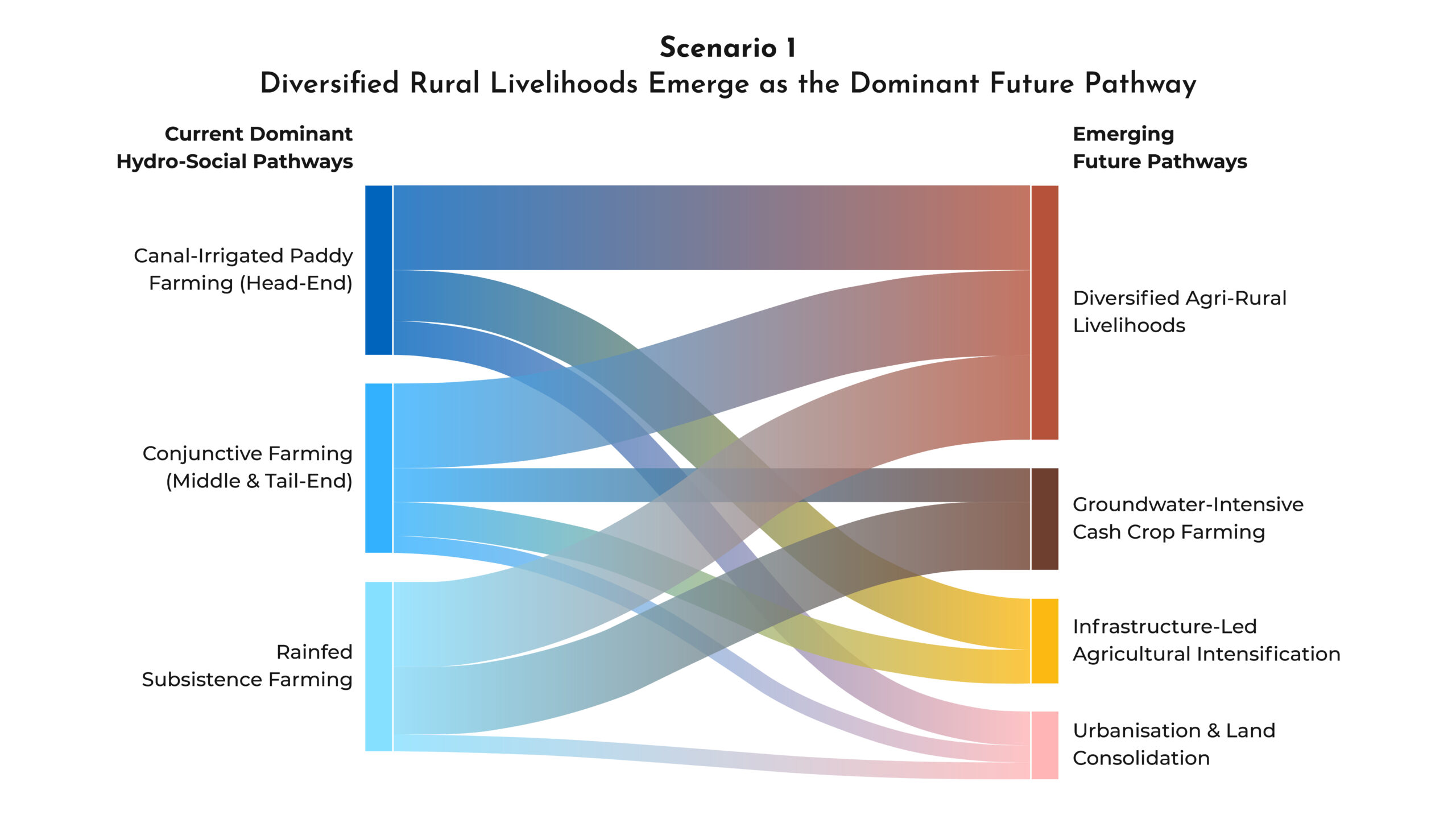
Figure 1: Scenario 1, where ‘diversified rural livelihoods’ emerges as the most dominant pathway in future.
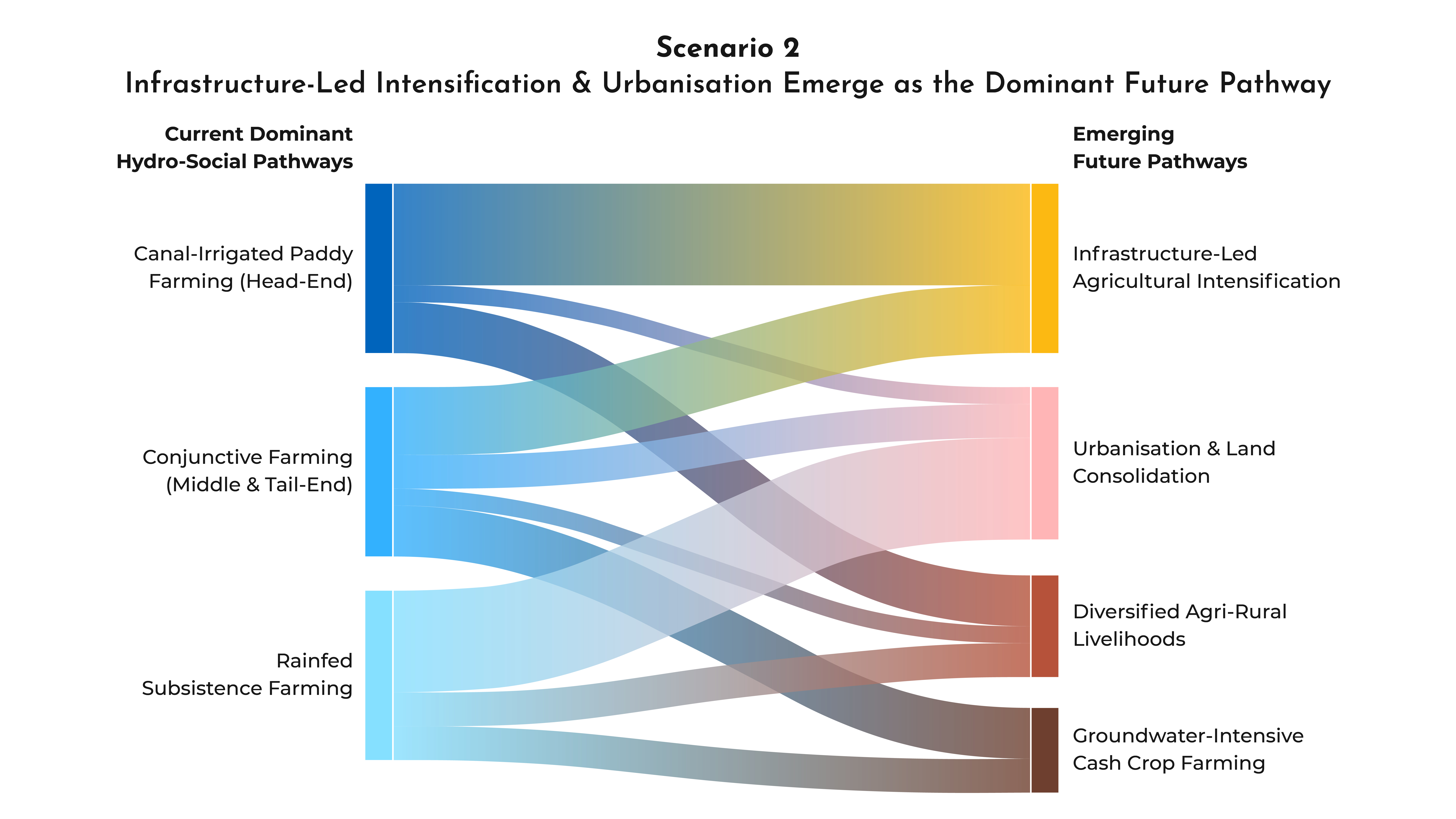
Figure 2: Scenario 2, where ‘infrastructure-led intensification’, coupled with ‘urbanisation and land consolidation’, emerges as the most dominant pathway in future.
The Transformation Lab: Designing for Resilience Together
This is precisely where WELL Labs’ Transformative Lab (T-Lab) adds unique value to the ecosystem. At its core, a T-Lab is a collaborative, experimental, and systems-oriented space in which multiple stakeholders (communities, practitioners, researchers, government, and civil society) come together to co-design, test, refine, and scale solutions that can move a socio-ecological system from a less sustainable path to a more resilient and equitable one.
Through interactions with the multiple local stakeholders in the Raichur T-Lab, the sixth pathway – the diversified rural livelihoods approach – emerged as a compelling long-term vision. Farmers cultivating diverse crops, supported by stronger market linkages and having supplementary non-farm incomes, are better positioned to thrive under climate stress, especially in the long term. Researchers and experts in agriculture and water management also support this as a promising path to resilience, equity, and sustainability.
Nevertheless, alternate futures will co-exist. The paddy-dominant system continues to benefit from entrenched policies. Groundwater extraction remains attractive for those who can afford it. Urbanisation carries strong social aspirations. Ignoring these realities would be naïve.
By making the full landscape of possibilities visible, the T-Lab and the pathways approach allow stakeholders to identify robust, low-regret actions – steps that build resilience regardless of which future unfolds. These could include interventions to improve water governance, such as strengthening water user cooperative societies in the canal command areas and linking them to producer cooperatives.
The pathways approach also helps think through long-term investments and lock-ins: for instance, how much should governments invest in purely infrastructure-led intensification of agriculture, if strong aspirations exist for off- and non-farm livelihoods and increasing urbanisation?
Such an approach moves the conversation from choosing a single ‘best’ path to designing a portfolio of actions that strengthen the system as a whole, both in the short and the long term. This helps ensure that while we are walking multiple pathways, we are consciously designing for resilience.
Acknowledgements
Heartfelt gratitude is extended to the farmers, community representatives, civic leaders, government officials, researchers, and civil society partners who participated in the Raichur 2047 visioning workshop in July 2025. Their openness, insights, and imagination made it possible to collectively explore diverse pathways and futures.
The support of Thumbi Labs in designing and implementing Raichur Jigsaw, conducted in January 2026, is gratefully acknowledged, as is the contributions of our local CSO partner, Prarambha, and the Climate Adaptation and Resilience (CLARE)’s CLARITY research programme.
About CLARE
CLARE is a UK-Canada framework research programme on Climate Adaptation and Resilience, aiming to enable socially inclusive and sustainable action to build resilience to climate change and natural hazards. CLARE is an initiative jointly designed and run by the UK Foreign, Commonwealth and Development Office and Canada’s International Development Research Centre. CLARE is primarily funded by UK aid from the UK government, along with the International Development Research Centre, Canada.
About CLARITY
Climate Adaptation and Resilience in Tropical Drylands (CLARITY), a research project under CLARE, is building equitable, sustainable, and climate-resilient development pathways in tropical drylands. This Global South-led project will result in the creation of long-term assets (data and tools) and capacities to achieve transformational change.
Authored by Arjuna Srinidhi
Edited by Pavan Srinath, Ananya Revanna
Follow us and stay updated about our work:
Related Posts
-
Co-Creating Solutions with Communities | Insights from the Futures Research Programme
The Futures Research team shares insights from their work on designing solutions for land and water challenges in the semi-arid Raichur and Chikkaballapur districts of Karnataka
-
Designing Climate Resilient Futures in Raichur
Raichur’s resilience to climate change is not built on a single path, but through the conscious navigation of multiple, co-existing hydro-social pathways. This makes the landscape of possibilities ...