
Building Community Expertise in Water Management: Insights From a Community Hydrology Programme in Raichur, Karnataka
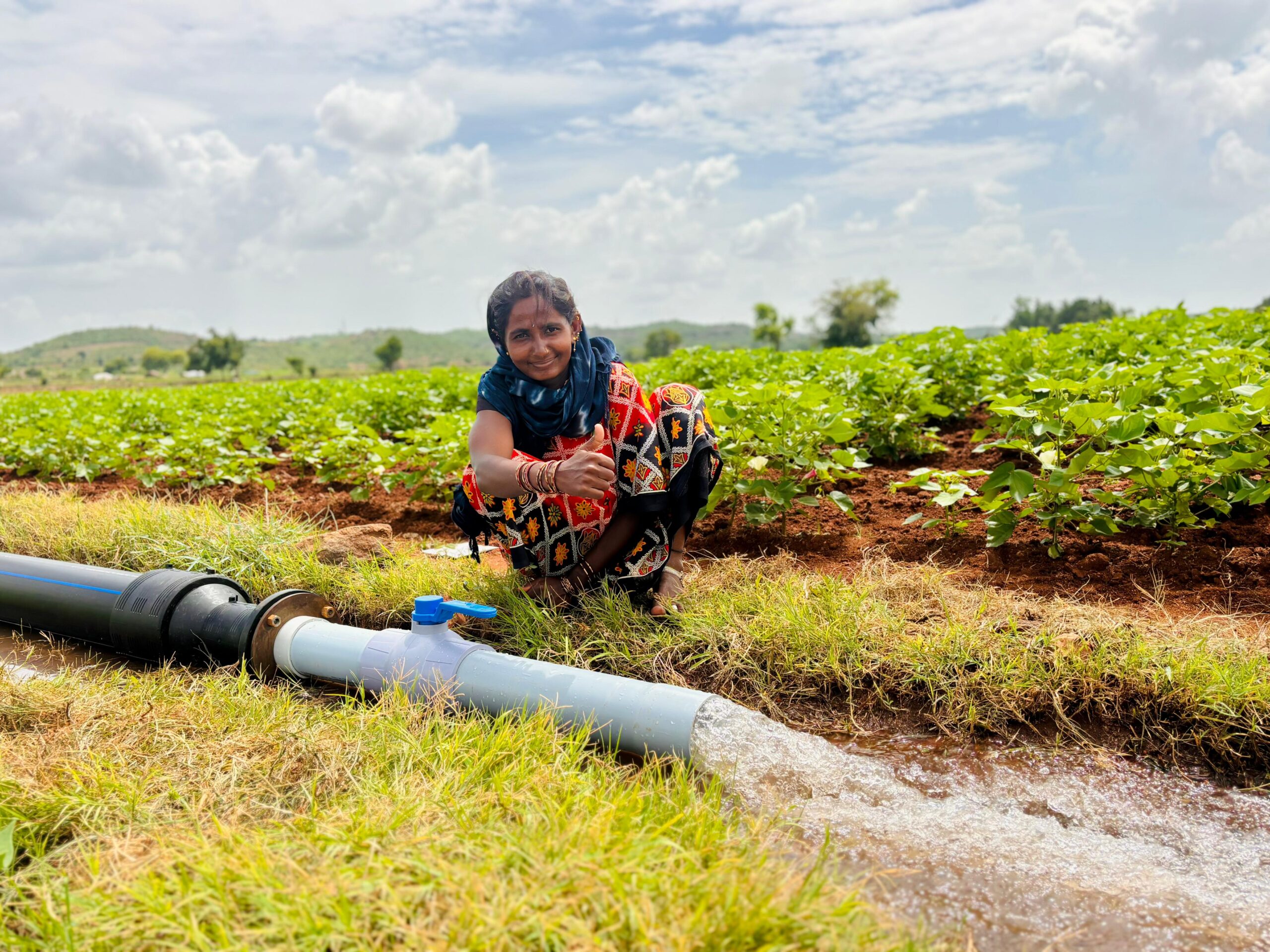
A woman sits next to a field irrigation channel in Raichur, Karntaka. Photo by Anupam Barman
The Community Hydrology Programme seeks to build local capacity for understanding and managing water in landscapes where rainfall, canal water, and groundwater interact in complex ways. When communities can measure and analyse their water systems, they are better equipped to make informed choices, negotiate water use, and participate meaningfully in local governance institutions. This granular, locally owned data and evidence-based decision-making are integral to the CLARITY project’s goal of co-creating pathways for a water-secure and climate-resilient Raichur.
In this endeavour, the programme worked with a cohort of 35 aspiring community hydrologists of varying ages and education levels to:
1. Inculcate a foundational understanding of groundwater, surface water, hydrogeology, soil, and crop-water relationships.
2. Measure and monitor rainfall, groundwater levels, and streamflow using simple, low-cost methods to leverage data for water management.
3. Prepare water balances and crop water budgets and use them to decide what crops to grow and when to schedule irrigation.
4. Strengthen community institutions and water governance by providing advisory services to water user cooperative societies and farmer groups.
5. Promote water stewardship by framing groundwater and canal water as shared resources requiring collective responsibility and management.
While their learning trajectories were uneven, the participants gained an understanding of hydrological concepts and could independently take measurements. They were also able to calculate water balances and crop water budgets with an HTML tool that WELL Labs developed.
However, they could not yet effectively translate hydrological insights into practical recommendations for water user cooperative society members. As a result, the programme was not able to develop a model where the former could provide water management advisory services to the latter. To ensure that the role of a community hydrologist is valued and sustainable, it must be clearly defined and remunerated, either through a fee-for-service or barter model. The adoption of efficient agricultural practices to improve water-use efficiency is also challenging as soil and water testing kits are not widely available and farmers require financial support to set up micro-irrigation systems.
The project team has incorporated participants’ feedback to shape the programme’s second phase. Next steps include merging the programme with the Advanced Centre for Integrated Water Resources Management’s (ACIWRM) ‘Farmer Water Schools’, creating visual guides for different tasks, and formalising the services community hydrologists can provide.
Chapter 1 of this report introduces the Community Hydrology Programme and its objectives. Chapters 2–4 delve into the four workshops under the programme, including their training modules, participant feedback, lessons learnt, and next steps. Chapter 5 delineates the programme’s outcomes, Chapter 6 insights from the workshops, and Chapter 7 the way forward. Chapter 8 compiles resources and presentations.
Fill these details to access the publication
Acknowledgements
Authors Arjuna Srinidhi, Shreenivas Dharmaraja, Pandu Shetty, Dina Zaman, Susan Varughese, Navitha Varsha
Editors Syed Saad Ahmed, Sahana Srinath
Suggested Citation Srinidhi, A., Dharmaraja, S., Shetty, P., Zaman, D., Varughese, S., & Varsha, N. (2025). Building community expertise in water management: Insights from a community hydrology programme in Raichur, Karnataka. WELL Labs, Institute for Financial Management and Research (IFMR) Society.
Follow us to stay updated about our work
Related Posts
Related Posts
-
Situation Analysis: Raichur Transformation Lab
This situation analysis report explores the water management and agricultural challenges and solutions in Raichur district, Karnataka. It presents pathways to climate-resilient rural development.
-
Raichur 2047: Imagining Flourishing Futures
The Raichur Visioning workshop invited residents and diverse, local stakeholders of Raichur to imagine the future of the city in 2047. This report details the method used, proceedings of the worksh...
-
Building Community Expertise in Water Management: Insights From a Community Hydrology Programme in Raichur, Karnataka
When communities can measure and analyse their water systems, they are better equipped to make informed choices, negotiate water use, and participate meaningfully in local water governance institut...