
Preparing for Bengaluru’s Next Water Crisis with Gayathri Muraleedharan and Veena Srinivasan
Veena Srinivasan and Gayathri Muraleedharan join host Pavan Srinath on this episode of The WELL Labs Show to unpack the nature of Bengaluru’s water crisis — what caused the severe summer crisis of 2024, why similar crises may recur, and what the city can do to avoid lurching from one groundwater emergency to the next.
The conversation explores why Bangalore’s water crisis is not a “Day Zero” reservoir crisis like Cape Town or Chennai, but fundamentally a groundwater crisis. Veena and Gayathri explain how the city depends on both Cauvery water and groundwater, why the most acute pain is felt in newly developed peri-urban areas and dense apartment clusters, and how Bengaluru’s hard-rock aquifers, uneven topography, and hyperlocal recharge patterns make the problem difficult to predict and manage.
Drawing on WELL Labs’ work on urban water balances, groundwater dependence, wastewater treatment, and water reuse, the discussion examines how much water Bengaluru needs, how much it receives from the Cauvery, and how much is being invisibly supplied through private borewells and tanker systems. They also explore why treated wastewater reuse, especially through decentralised sewage treatment plants in apartments and commercial complexes, may be one of the most practical ways to reduce pressure on the city’s fragile aquifers.
The episode also reflects on what has changed since the 2024 crisis: greater seriousness around water reuse, more interest from apartment communities in running STPs efficiently, efforts by BWSSB such as the Green Star Challenge, and the need for stronger incentives, better monitoring, groundwater recharge, sponge landscapes, and more realistic water pricing. The conversation ends with a hopeful but grounded argument: that while Bengaluru’s water crisis is systemic, the city also has many solutions that can be acted upon locally — by institutions, neighbourhoods, apartments, and public agencies alike.
Veena Srinivasan is leading WELL Labs’ mission to transform scientific research into real-world impact by designing solutions that simultaneously create livelihoods and conserve the environment. In 2022, she was listed as one of the top-cited scientists in the world.
Gayathri Muraleedharan is the Deputy Head in the Urban Water programme at WELL Labs. She is an urban and regional planner passionate about understanding complex urban challenges, and solving them through sustainable, inclusive, and action-oriented approaches.
Pavan Srinath is the Managing Partner for Communications and Development at WELL Labs. Pavan is a communications and public policy professional who has spent over 14 years working in Bangalore’s not-for-profit sector.
This episode is essential viewing for anyone interested in Bengaluru’s water future, urban groundwater, wastewater reuse, city planning, climate resilience, and practical pathways to water security in growing cities.
Resources:
- Pavan Srinath: LinkedIn, WELL Labs Website
- Veena Srinivasan: LinkedIn, WELL Labs Website
- Gayathri Muraleedharan: LinkedIn, WELL Labs Website
- Explainer | How Can We Solve Bengaluru’s Water Crisis?
- How Water Flows Through Bengaluru: Urban Water Balance Report – WELL LABS
- Soak Up the Rain: How a ‘Sponge City’ Makes Urban Areas Climate Resilient – WELL LABS
- Experts Explore Scaling of Wastewater Reuse in Urban India
- Catalysing Reliable Decentralised Water Reuse in Bengaluru
- Promoting Wastewater Reuse & Incentives for Water Conservation
- Green Star Challenge
- IISc report on groundwater depletion predicts water shortage in 65 wards this summer in Bengaluru
- India’s ‘Silicon Valley’ is running dry as residents urged to take fewer showers and use disposable cutlery
- A year when Bengaluru faced acute water crisis and took many remedial measures
- Bengaluru weather: From ruthless 2024 water crisis to overflowing lakes in 2025
- India’s Bengaluru fast running out of water – and it’s not summer yet
The WELL Labs Show features rich conversations on water, environment, land and livelihoods, from the people and partners of WELL Labs. Hosted by Pavan Srinath, each episode explores complex environmental and social issues and helps you understand systems and dynamics better.
Subscribe to The WELL Labs show on the WELL Labs YouTube channel.
Recording by Nabina Chakraborty, Vraj Acharya and Nanditha Gogate
Video editing by Ranjith Kumar S
Graphics and artwork by Kanishka Goyal and Aparna Nambiar
Podcast production and management by Nabina Chakraborty and Pavan Srinath
Follow us to stay updated about our work.
Related Posts
Related Posts
-
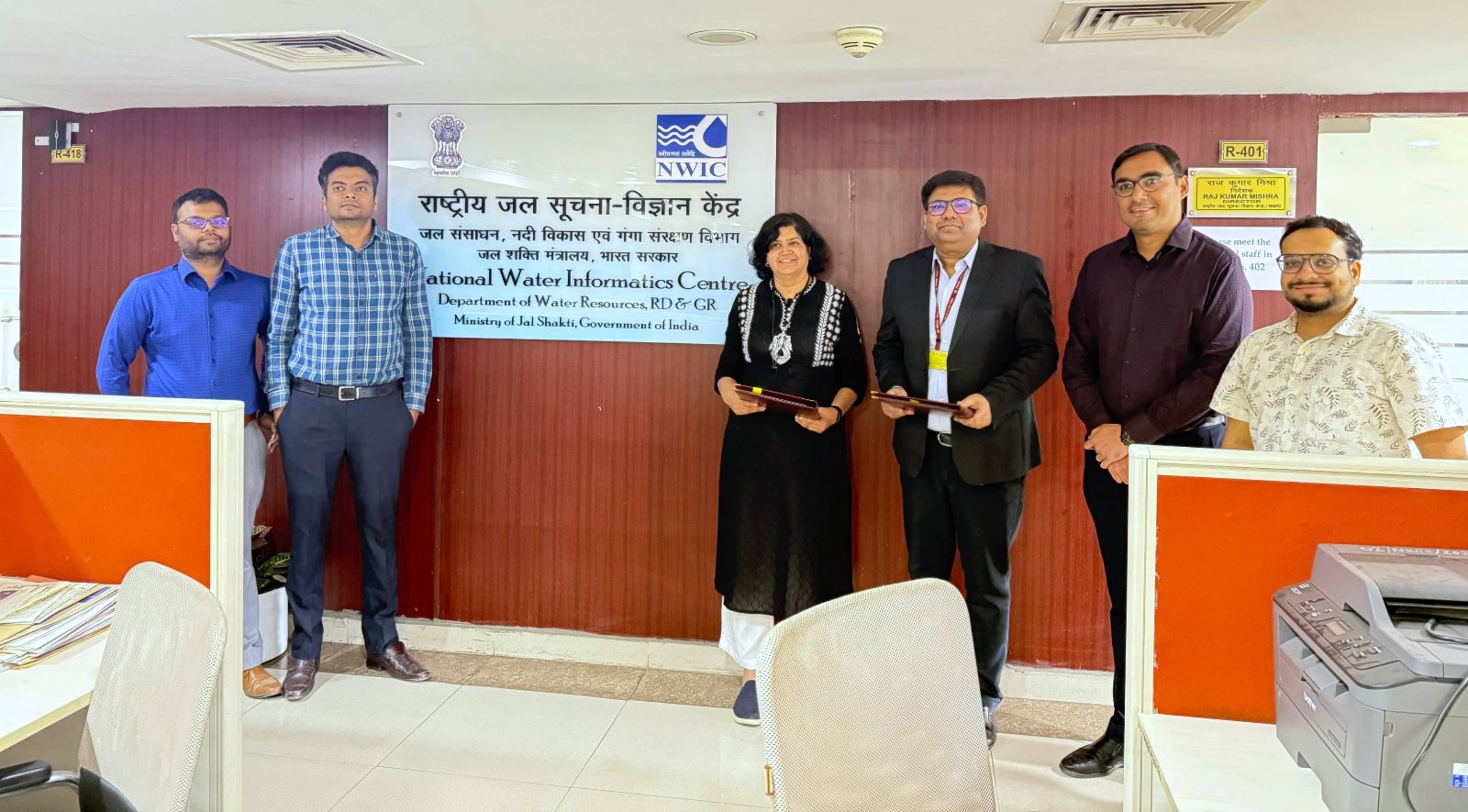
WELL Labs signs an MoU with the National Water Informatics Centre, Ministry of Jal Shakti
This partnership is a significant step toward enhancing water data ecosystem of India.
-

WELL Labs’ Values: Fostering Deep Empathy, Problem-First Thinking, and Scientific Excellence, Among Others
Learn more about the values the WELL Labs team aims for in its work of transforming water systems across India
-

Welcome Back to the Water Data Podcast!
The Water Data Podcast is a talk show on the science, systems, and stories of water hosted by Veena Srinivasan. Every other Tuesday, sit down and listen to researchers, innovators, government offic...
-
Governing Water Resources with Dr Somasekhar Rao
Dr Somasekhar Rao has a wide-ranging discussion with host Veena Srinivasan on the first episode of Season 2 of the Water Data Podcast.
-
Groundwater and Markets with Dr Soumya Balasubramanya
Dr Soumya Balasubramanya has a wide-ranging discussion with host Veena Srinivasan on the second episode of Season 2 of the Water Data Podcast.
-
Flood Science and Management with Dr Günter Blöschl
Stockholm Water Prize 2025 winner Dr Guenter Bloeschl shares a masterclass on the science and management of floods on the third episode of Season 2 of the Water Data Podcast