
WaterReuseLab
WELL Labs has partnered with the Swiss Federal Aquatic Institute of Science and Technology (Eawag) to research decentralised wastewater treatment and reuse and enable their adoption in Bengaluru for improved water security
The WaterReuseLab project aims at analyzing whether and how a new generation of high-quality decentralized wastewater reuse systems could be developed in Bengaluru, India and scaled up to other cities in India and beyond. In close collaboration with research partners and local stakeholders, the project assesses technologies, water quality monitoring approaches, business models, user acceptance issues and governance models that taken together could help create water reuse solutions ‘that work’ in addressing complex water challenges of booming megacities.
Background
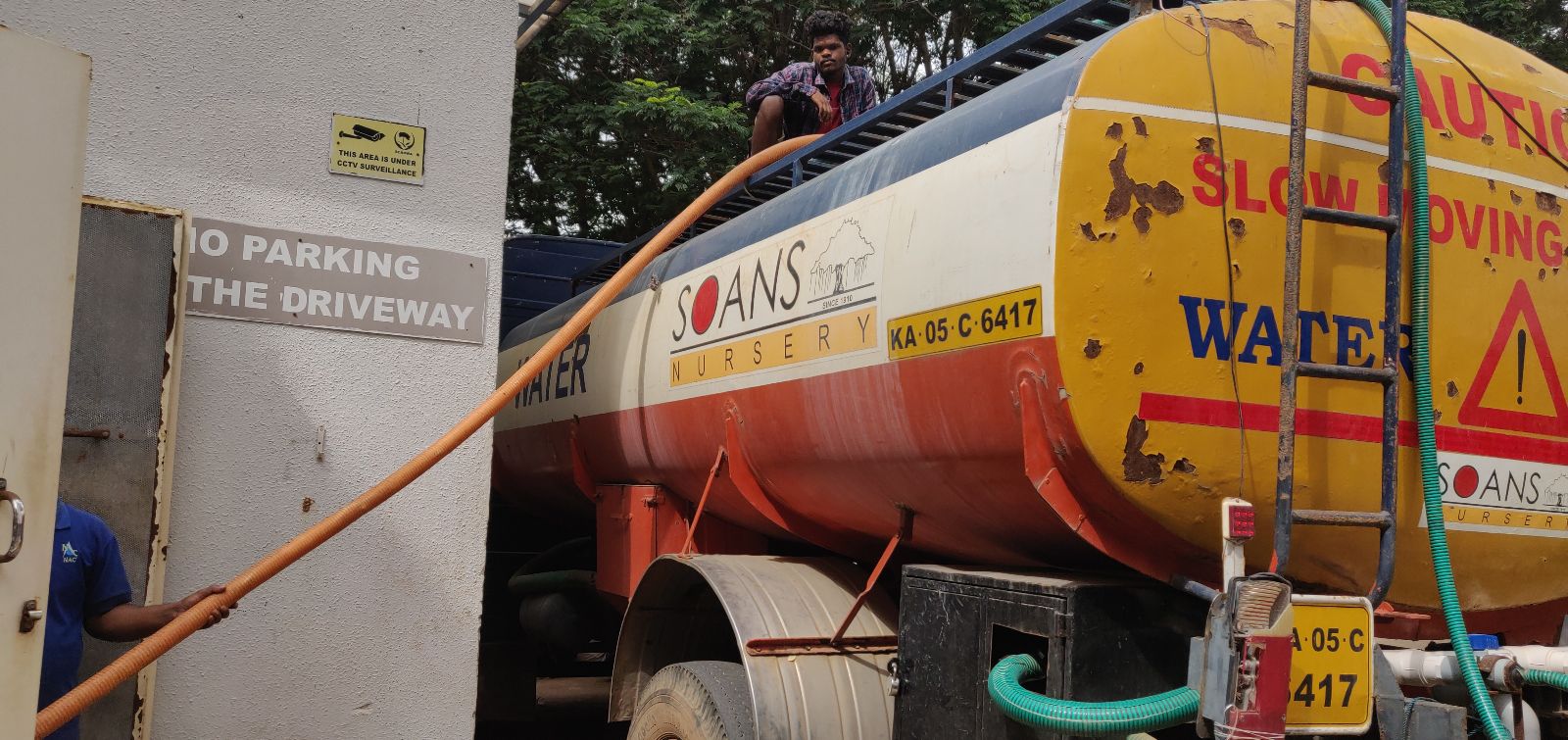
Providing a growing urban population with safe and affordable water is a key sustainability challenge of our time, especially in the booming megacities of low-and middle-income countries. Decentralized water treatment and reuse systems (DWTRS), which treat wastewater onsite and enable water reuse directly within buildings or in construction sites, laundries or public parks in the neighborhood offer a flexible and drought-resilient solution. However, few cities have successfully implemented DWTRS at scale, and research on how technological and social factors jointly influence the performance of this innovative water management approach is still scarce.
The WaterReuseLab project addresses this gap by exploring the development of DWTRS in Bengaluru, India—a case study exemplifying water and sanitation challenges in rapidly growing megacities. The project applies a socio-technical systems perspective for identifying success conditions for creating reliable, acceptable, affordable, and scalable DWTRS solutions. It will provide a holistic assessment of DWTRS development potentials and barriers and analyze how shifts in context conditions, incentives, and actor strategies impact the emergence of a new template for urban water management in Bengaluru. Additionally, the project will examine how local coalitions can navigate various development scenarios and how solutions developed in Bengaluru could diffuse into other Indian cities and beyond.
Project Structure
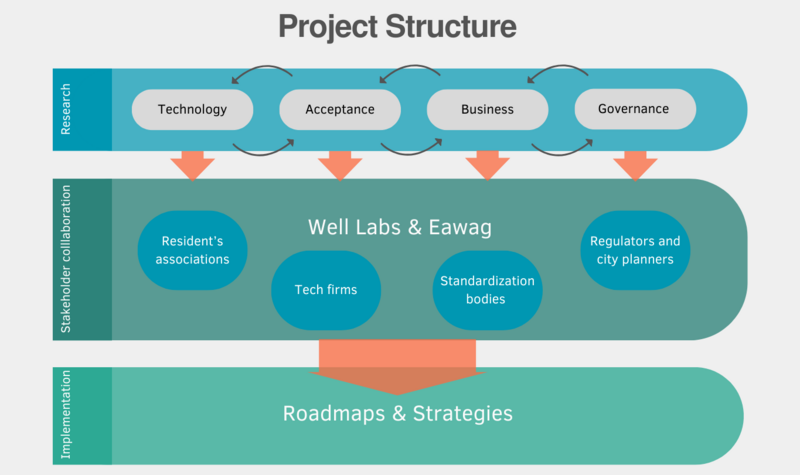
The project builds on intensive inter- and transdisciplinary exchanges among researchers from various Eawag departments, CDD, as well as practice partners in Bangalore and Switzerland. Our research questions and outputs are defined and refined through constant interactions with partners and through a series of stakeholder workshops organised across the full duration of the project.
Work Package 1: Technology
Work Package 2: User Acceptance
Work Package 3: Business Models
Work Package 4: Governance
Work Package 5: Stakeholder Interaction
All project results and outputs are accessible on eawag.ch/waterreuselab and welllabs.org/urban-water/
Point of Contact

Shreya Nath
Managing Partner, Urban Water
Project Duration
June 2023 – June 2026
Project Partners
Swiss Federal Institute of Aquatic Science and Technology (Eawag)
Publications
Binz, C., Nath, S., Aalbu, S., J., Miörner, J., Morgenroth, E., Rajora, C., Muraleedharan, G., Nagappa, D., Narayan, A., Singh, S. Palur, S., Prasad, H., Trikannad, S., Truffer, B., & Xue, L, Contzen, N., Kollmann. (2025). Strategies to Catalyse Safe, Efficient, and Reliable Decentralised Water Reuse in Bengaluru: Insights From Two Stakeholder Workshops Under the WaterReuseLab Project. Eawag and WELL Labs.
Narayan, A. S.; Dorea, C.; Willetts, J.; Friedman, L.; Kalbar, P.; Chandran, K. (2024) A portfolio approach to achieving universal sanitation, Nature Water, 2(11), 1044-1047, doi:10.1038/s44221-024-00336-0
Kollmann, J.; Nath, S.; Singh, S.; Balasubramanian, S.; Reynaert, E.; Morgenroth, E.; Contzen, N. (2023) Acceptance of on-site wastewater treatment and reuse in Bengaluru, India: the role of perceived costs, risks, and benefits, Science of the Total Environment, 895, 165042 (11 pp.), doi:10.1016/j.scitotenv.2023.165042
Reynaert, E., Nagappa, D., & Morgenroth, E. (2023). Research brief: using sensors and automated chlorination to improve the microbial water quality of on-site sewage treatment plants in Bengaluru. doi:10.3929/ethz-b-000603755
Blogs and Media Coverage
- Why Better Wastewater Management Could Help Solve Bengaluru’s Water Crisis
- Bengaluru has Highest Number of Decentralised STPS in the World
- Wastewater Conference: Turning Bengaluru into the ‘Silicon Valley for Water Innovation’
- How We Can Make Bengaluru’s Water Systems More Sustainable and Affordable
- What We Learnt from the Water Reuse Project in 2023
- Wastewater Reuse Policies across Indian States
- Where Does Bengaluru Get Water from?
- Bengaluru’s Wastewater Market Experiment: A Promising Solution for Water-Scarce Cities Globally