
Empowering Rural Women Through AI for Sustainable Agriculture
Demonstrating the use of TEROS12 Soil Moisture sensor and entering data into logbook and KoboCollect app | Photo credit: Manjunatha G
Considering the frequent dry spells and erratic rains caused by intensifying climate change, adapting to monsoon variability is a foundational step toward resilience. It requires a fundamental shift in strategy, from maximising yield by expanding large-scale irrigation, to focusing on mitigating risk through protective irrigation; that is, by providing timely access to water needed to prevent crop failure during dry spells.
Effective soil moisture management is at the core of this protective strategy. Soil moisture, the water in the tiny spaces between soil particles, is a key source of water for crops, serving as a lifeline by enabling nutrient absorption and growth. When managed well, soil moisture can buffer crop yields from climate risks, such as long dry spells and weak monsoons, and act as a critical resource for smallholder farmers.
For effective management, measuring and monitoring soil moisture is crucial. The measurements can enable farmers and researchers to make decisions and understand climate trends. By tracking real-time moisture levels, farmers can transition from schedule-based irrigation to ‘just-in-time’ delivery, ensuring crops receive water precisely when they hit a stress point, conserving limited groundwater reserves.
To accurately measure soil moisture variation within a given plot, multiple quantifications are required to capture the heterogeneity. However, conventional monitoring methods require expensive sensors for in-situ measurements and spot surveys, making it expensive and limiting scalability. Without obtaining data at scale, effectively managing large-scale irrigation and moisture deficits is challenging.
This obstacle can be overcome through satellite-based remote sensing soil moisture estimates, which offer a broader spatial scale. Nevertheless, the resolutions are very coarse, at 1 km or larger, making them difficult to use for individual smallholder farms and fields.
Still, satellite-based remote sensing data are helpful. For instance, Sentinel-1 collects radar data every 12 days at 10m–30m scale, and NASA’s Soil Moisture Active Passive (SMAP) provides daily, albeit coarse, soil moisture maps at 9km scale. AI and machine learning models offer an opportunity to downscale satellite-based soil moisture data to the field level (50m-100m), potentially allowing us to understand field-level soil moisture dynamics. This can support rapid drought identification and targeted investments in water-saving interventions.
However, for these models to be accurate, calibration with locally verified soil moisture sensor readings is crucial. Accordingly, WELL Labs and Stanford University have ushered in a quiet revolution in the Domalapalli village of Chintamani taluk, Chikkaballapur district, Karnataka. As part of the collaboration between WELL Labs, Stanford University, Watershed Support Services and Activities Network (WASSAN), and Gramin Vikas Vigyan Samiti (GRAVIS), an approach integrating artificial intelligence (AI) with on-the-ground citizen science and involving community to provide field-level soil moisture measurements has been implemented. And this initiative, called AI for Soil Moisture Management, is being spearheaded by rural women.
Local Women’s Participation: Vital for Ground-Truthing AI Models
The collaborative system combines satellite data (like Sentinel-1 for radar or SMAP for coarse soil moisture maps) with real-time ground measurements using the TEROS12 soil moisture sensor. Machine learning models are then trained on these datasets and ‘learn’ the relationship between what the satellites observe and the true on-ground conditions reported by the collectors. This results in a system that can deliver field-level soil moisture predictions, serving even the most remote, resource-constrained farmers.
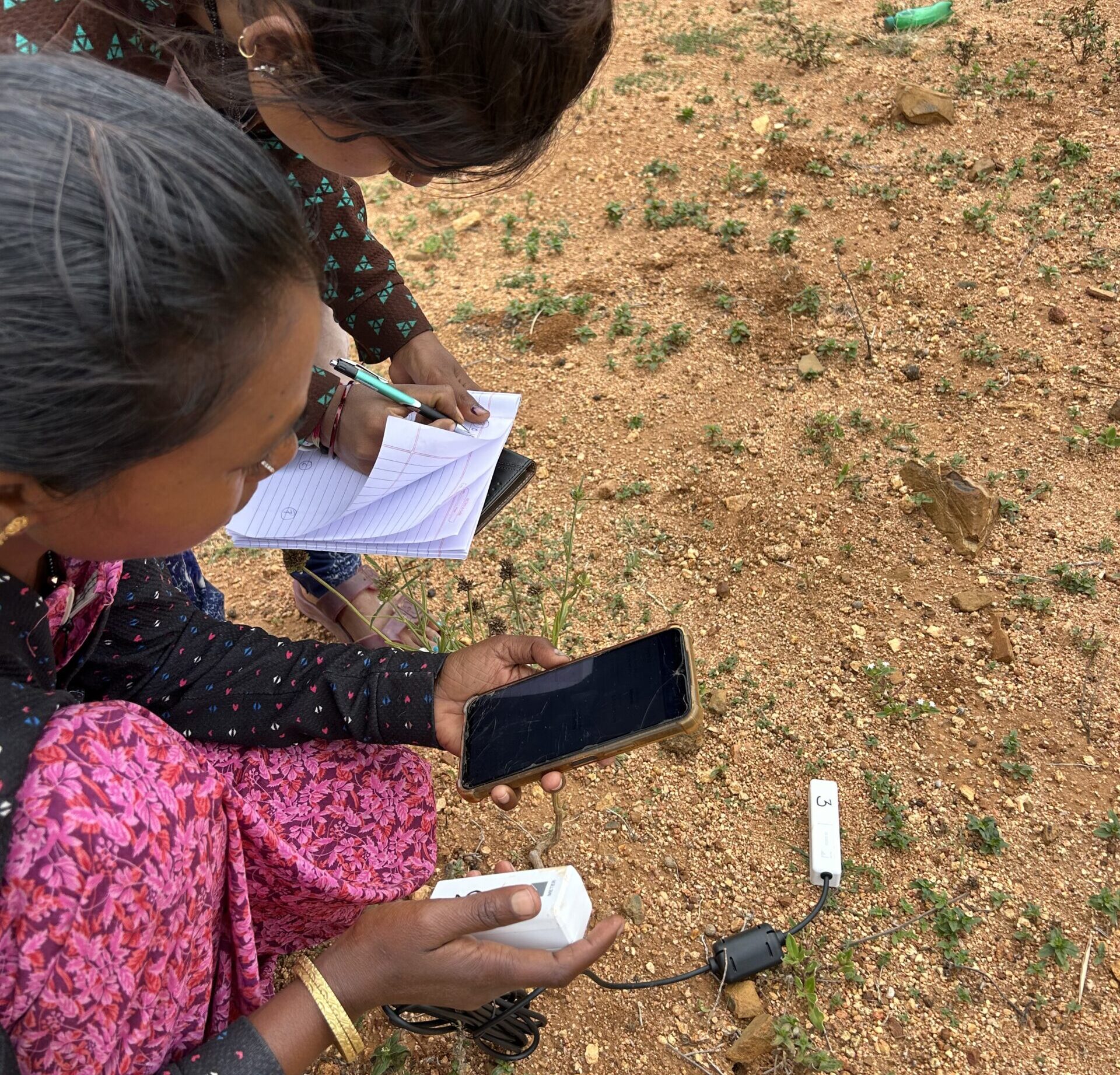
The women receive direct economic incentives tied to the reliability and scientific quality of the collected soil moisture data
Photo Credit: Manjunatha G
The role of these data collectors, many of whom are local women acting as citizen scientists, is fundamental to the success of this initiative. By providing high-quality, local sensor readings, they enable the ground-truthing necessary to validate and refine satellite-based AI models. These collectors bridge the gap between remote sensing and on-ground reality by providing thousands of data points across diverse crops and soil types. Their work directly improves the accuracy of national-scale soil moisture maps, which are essential for creating large-scale crop security plans. Ultimately, this effort supports the resilience and livelihoods of millions of rainfed farmers across India.
Leading Data Collection: Building Women’s Confidence and Social Status
Rural women have historically been excluded from technology-led initiatives due to systemic barriers and a lack of exposure. However, the AI for Soil Moisture Management project is placing women at its core. The women are trained to use the TEROS12 sensor and the KoboCollect data logging app, because of which they understand the importance of data quality and ethical technology handling.
By leading the data collection efforts, the women of Domalapalli gain far more than just technical proficiency; they undergo a deep personal and professional transformation. One of the most immediate changes is a surge in self-efficacy. As they master complex tools, these women gain confidence in being able to solve practical, real-world problems using technology. This expertise often places them in leadership roles within their community, where they frequently help their male peers navigate mobile applications or perform intricate sensor calibrations.
Beyond personal growth, the initiative also provides a vital economic opportunity. The women receive direct economic incentives tied to the reliability and scientific quality of the collected soil moisture data. This financial earning, paired with their new digital skills, significantly builds their social capital. It effectively dismantles long-standing stereotypes regarding technological roles of women in rural India, and sparks a sense of curiosity and possibility among the next generation of girls.
Ensuring Quality Via Strict Data Collection Rules
A typical day for a data collector begins at the time of the Sentinel-1 satellite overpass, at around 6 am. Work is dispatched via WhatsApp, evidence of rural digitisation’s rising importance. The collectors prepare their sensors, ensuring they are charged and ready for accurate readings. The quality of an AI model’s output is only as good as the quality of the input data. Therefore, to ensure the collected data is robust and accurately reflects the complex dynamics of the field, data collectors follow a detailed, scientific protocol.
At each field, they execute a precise ‘9-point’ sampling algorithm. This ensures they capture the variability of soil moisture by measuring at the roots and between rows. Armed with their notebooks and smartphones, they meticulously follow these steps:
- Insert the sensor and wait for stable readings before recording each data point.
- Alternate positions to capture the complexity of the soil-crop dynamics.
- Log every detail with field IDs and timestamps.
- Upload data using the KoboCollect app.
This enables the collection of high-quality input that can help transform local data to create national-scale maps. Through this, these women serve as data stewards who co-design the technology for real-world needs. They contribute to the protocol in the following ways:
- Identify contextual needs: Collectors identify where rigid scientific grids might fail due to local obstructions or unique field geometries.
- Suggest protocol tweaks: They suggest adjustments to the sampling process based on their on-ground experience, ensuring the technology is not merely imposed but is functional for smallholder farms.
- Perform operational troubleshooting: By mastering sensor calibrations, they help peers solve technical issues that could otherwise result in data gaps.
Accordingly, the technology becomes a shared tool for resilience, grounded in the meticulous work and local insights of these rural champions. This project creates a replicable model for gender inclusion that can be scaled to other villages. As more women step forward, a new pipeline is created for training future agritech leaders, field researchers, and data stewards across rural India. This is essential for an inclusive agricultural future, ensuring that the benefits of AI-driven innovation are shared across genders.
Cultivating a Sustainable and Inclusive Future
WELL Labs, Stanford, WASSAN, and GRAVIS aim to build the first public, open benchmark dataset of smallholder farm soil moisture in India. Scaling this effort to future-proof farms and reinforce community resilience requires expanding collector cohorts. Investing in digital literacy and providing ongoing support so all rural people can participate is, therefore, essential.
By centreing women as ambassadors of community-led science, crucially by recruiting and mentoring more women, technology and tradition meet to cultivate leadership, hope, and a new vision for equitable rural prosperity. This collaborative data collection does not just result in maps; it creates tangible use cases that transform how stakeholders manage water:
- For individual farmers: Accurate soil moisture predictions give farmers precise information on applying water at the right time to prevent crop failure.
- For local policy makers: Rapid drought identification enables government agencies to target investments in water-saving interventions more effectively.
- For researchers: Open benchmark dataset provides a foundation for the development of new agricultural tools tailored to the unique conditions of Indian smallholder farms.
The shift towards a risk-mitigation strategy based on protective irrigation, supported by AI and grounded in local women-led data collection, is a critical step towards building an inclusive and sustainable future for Indian agriculture.
Acknowledgements
This work is supported by Stanford University and Janapara Foundation.
Authored by Anu Shetty K N, Veda Sunkara, and Siddarth Sachdeva
Edited by Apuurva Sridharan
Published by Nanditha Gogate
Follow us and stay updated about our work:
Related Posts
-
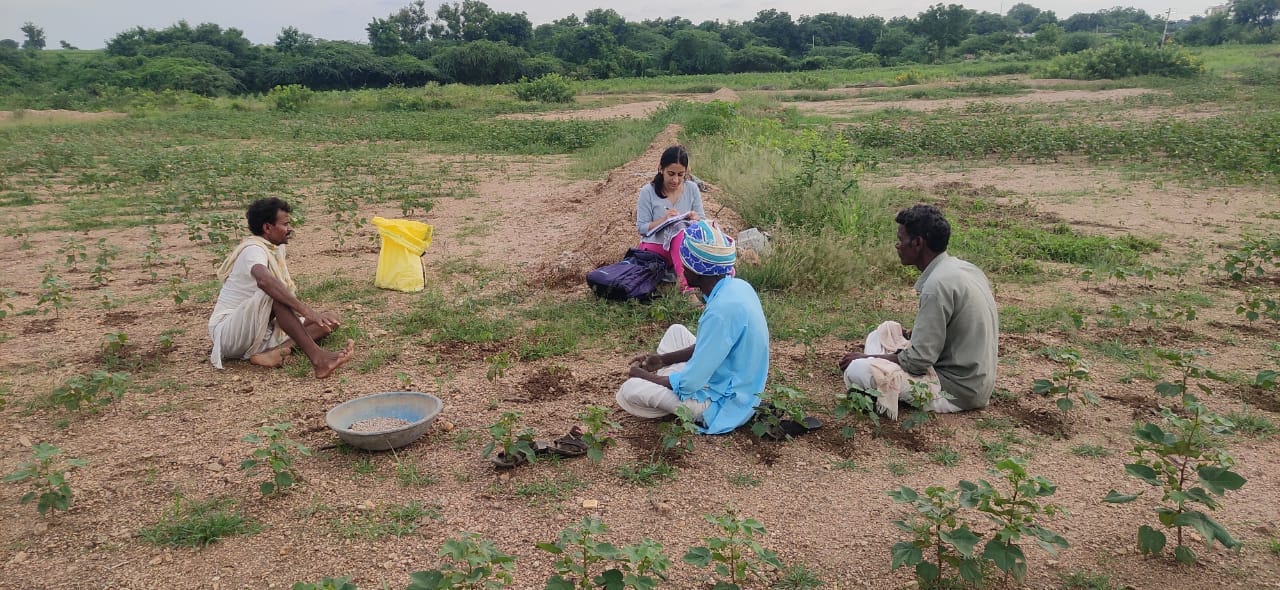
Raichur Land Restoration Pilot: How We Studied the Local Context
-
Field Notes from Sittilingi Valley: How a Farmer Collective Addresses Both Healthcare and Agrarian Distress
The Sittilingi Organic Farmers Association (SOFA) shows how collectives founded on strong community values can benefit small and marginal farmers and the local ecology.
-
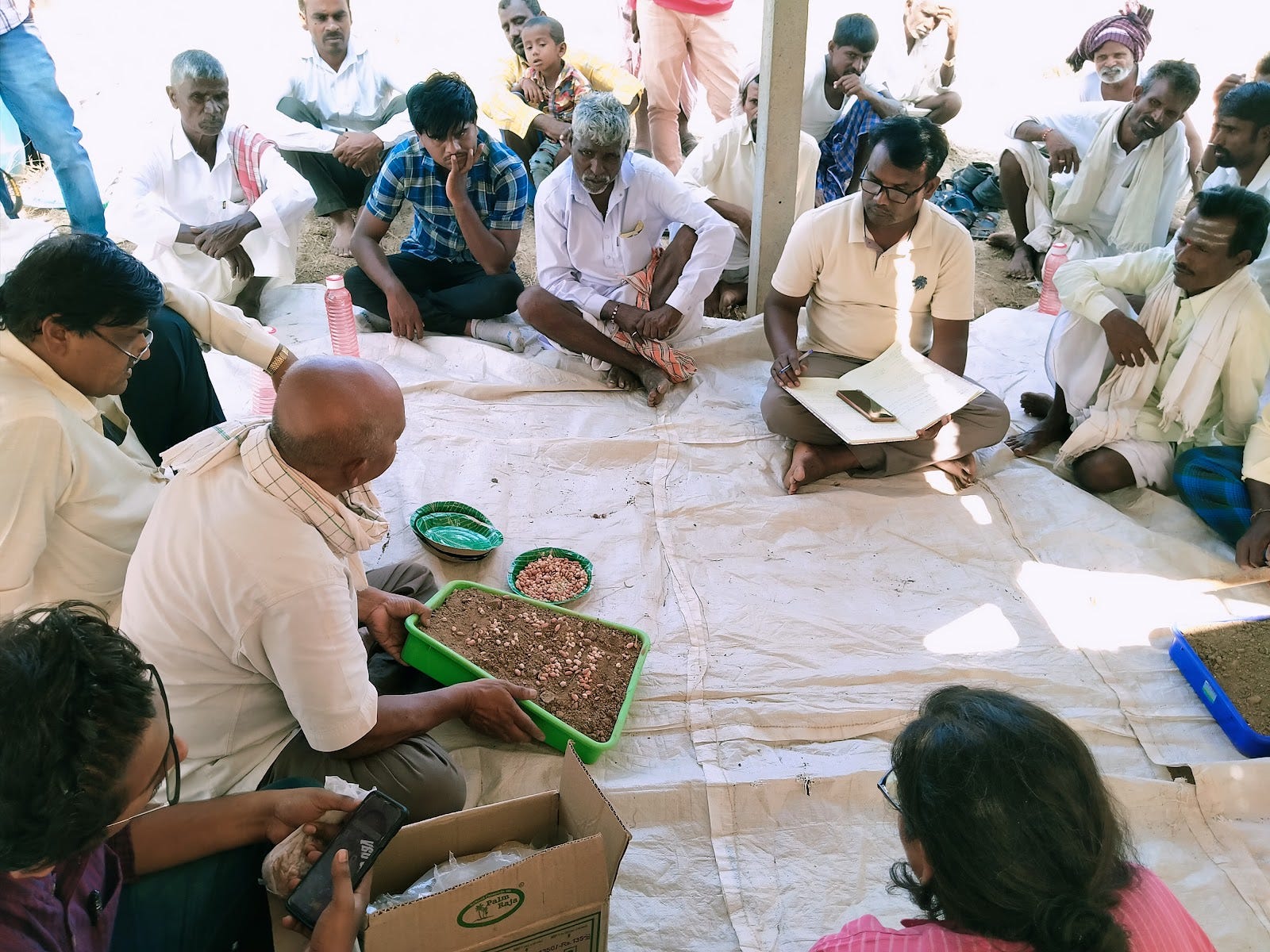
Soil Workshop in Raichur: Farmers Keen on New Methods to Rebuild Soils
Around 35 farmers attended the two-day workshop held in Raichur’s Devadurga taluk to learn about how they can test and improve soil quality,
-
Part 1: Journey Mapping to Plan the Future of Mukkanal’s Farmers
Through journey mapping, farmers can have a say in the blueprints of their own progress
-
Part 2: Livelihood Lessons and Insights from Journey Mapping in Mukkanal
A journey mapping exercise gave us a deeper understanding of livelihood patterns, challenges, and the impact of land degradation on households in our land restoration pilot site
-
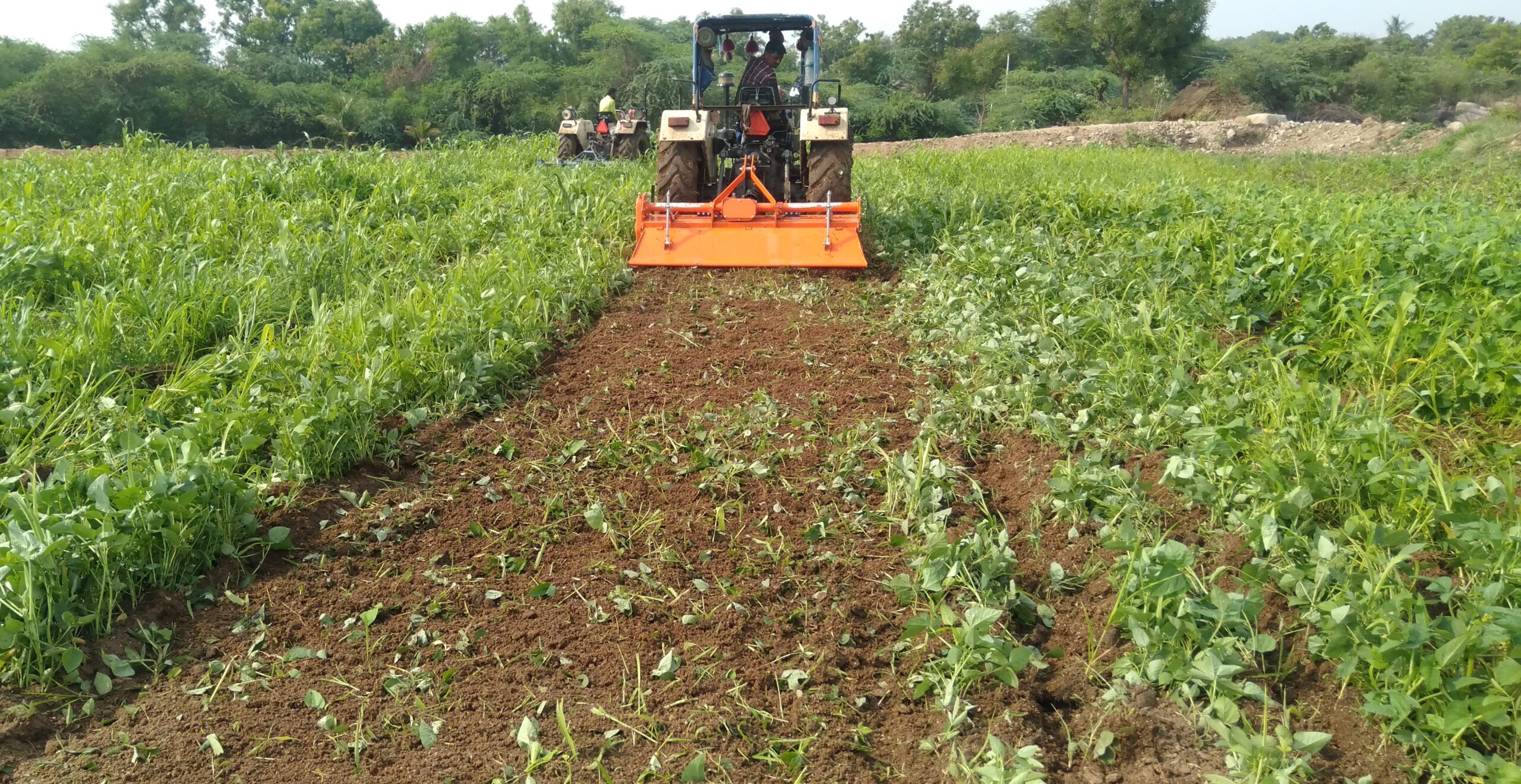
Explainer: How Green Manure Can Help Degraded Farmlands Sustain Themselves
The traditional agricultural practice of green leaves manure involves creating manure and fertiliser from natural, homegrown plants as sources of various nutrients for soil