
Rural Futures
The Rural Futures programme seeks to transform rural lives and livelihoods by increasing farming incomes while restoring degraded land and water resources.
Photo by Nabina Chakraborty
The Rural Futures programme addresses the interlinked challenges of unequal water access, land degradation, and low farming incomes through its five-lever approach. We work in both canal-irrigated and dryland (rainfed) landscapes in the semi-arid Raichur, Koppal, and Chikkaballapur districts of Karnataka.
Our partners include the Climate Adaptation and Resilience in Tropical Drylands (CLARITY) project, Advanced Centre for Integrated Water Resources Management, Prarambha, DCB Bank, Nvidia, IHE Delft Institute for Water Education, SOIL Trust, and Innovation Guild.

The Rural Futures programme’s five-lever approach.
Illustration by Aparna Nambiar
Our Work
Designing and Building Irrigation Infrastructure for Improved Last-Mile Water Access
In Narayanpur Right Bank Canal’s Distributary 10, we are:
1. Building eight field irrigation channel pipelines.
3. Institutionalising water budgeting and electronic participatory rural appraisal tools in water user groups to guide real-time irrigation decisions.
In the dryland villages of Mandalgudda, Mukkanal, and Suldagudda, we are:
1. Expanding protective irrigation over 200 acres through collective borewell sharing, community lift systems, and tank-revival initiatives.
2. Developing a comprehensive crop and water security plan to overcome periods of water stress. The plan integrates surface water, groundwater, and soil moisture using digital and remote sensing tools like Jaltol.
Strengthening Community Knowledge Systems and Cooperatives for Collective Action
1. Setting up water user groups in Ganadhal and Myakaladoddi villages as training hubs for other villages at the tail-end of the Narayanpur Right Bank Canal. We are formalising water distribution protocols and irrigation scheduling, and strengthening the community’s capability to maintain the irrigation infrastructure.
2. Scaling the community hydrology programme to five villages in canal command areas and three in rainfed areas. The goal is to have a corpus of young professionals trained in groundwater monitoring, canal flow tracking, and crop water budgeting, and embedded in local institutions to ensure that scientific insights support everyday farming decisions.
3. Convening a series of cross-departmental meetings in Raichur district with the Command Area Development Authority, Krishna Bhagya Jala Nigam Limited, Advanced Centre for Integrated Water Resources Management, and panchayats to secure policy and infrastructure alignment.
Deploying Technological Innovations and Support Systems to Address the Labour Burden of Sustainable Agricultural Practices and Create Rural Livelihoods
1. Piloting a custom hiring centre (these centres provide machines, tools, and agricultural services to farmers on rent) and incubating 10–15 village-level entrepreneurs to reduce the drudgery involved in diversified cropping systems like Akkadi Saalu.
The centre will offer mechanised weeding, spraying, harvesting, and sowing services for over 300 acres in 10 canal and dryland villages. They will be run by local entrepreneurs, especially women and landless youth.
2. Providing training on tool maintenance, pricing models, and cooperative ownership structures for the custom hiring centres.
3. Conducting a technology assessment to explore the performance and suitability of electric weeders, seed drills, and transplanters in rainfed fields.
4. Researching agricultural labour, with a focus on quantifying changes in wages, improvements in worker safety and productivity, and the time saved through mechanisation.
Promoting Access to Alternative Agricultural Inputs (Seeds, Pesticides, and Fertilisers) to Support Ecological Farming Methods
Enabling 3–5 women-run self-help groups to provide inputs across canal command and dryland villages.
These will eventually serve over 500 farmers, supplying regenerative inputs like green manure and native seed varieties suitable for mixed cropping. Our entrepreneurship support includes credit facilitation, branding for local agricultural inputs, and monthly production calendars aligned to crop cycles.
*****
In 2024–2025, we supported the formation of a bio-resource centre (local hubs that provide eco-friendly agricultural inputs to help farmers transition away from conventional farming practices) in Amarapura gram panchayat. More than 200 farmers accessed seeds from the community-managed centre in both kharif and rabi seasons and over 70 farmers adopted the use of liquid manure.
We also trained community members, including 23 women, in Mukkanal and Mandalgudda villages (Raichur district) and Malakasamudra and Chikmyageri villages (Koppal district) to run bio-resource centres.
Developing Pathways to Improve Market Access and Make Crop Diversification Economically Viable
From May to July 2025, we conducted a study on existing crop value chains and market systems in Raichur. Based on the insights, we formulated strategies to increase farmers’ share in the market value of crops, especially pulses, cotton, groundnut, and oilseeds. Our roadmap is as follows:
1. Aggregating harvested produce through farmer producer organisations.
These organisations manage logistics, quality control, and collective marketing. Equipping them with post-harvest infrastructure, such as solar dryers, moisture meters, and storage and grading facilities can help reduce post-harvest losses, improve price realisation, and reduce the dependency on intermediary agents and informal creditors. They also play a key role in bundling inputs, finance, and market contracts to help farmers negotiate better terms and prices.
2. Establish post-harvest hubs as micro-enterprises managed by women and the youth. These entrepreneurs offer services such as procurement, sorting, grading, and packaging, supported by digital tracking and standardised pricing.
We are training these entrepreneurs and incubating post-harvest hubs through a proposed “rural MBA programme” that builds a network of micro-enterprise consultants using the National Rural Livelihood Mission’s framework for enterprise-building.
Piloting Water Governance and Agroecological Models in the Groundwater-Dependent Chikkaballapur District
Our pilot projects in Chikkaballapur are building:
a. Socially inclusive groundwater security systems to provide protective irrigation to farmers without borewells.
b. Infrastructure for shared water use, including pipes and pumps, managed by emerging borewell water user cooperative societies.
c. Water budgeting tools developed through participatory rural appraisal techniques and digitisation.
We shall also test the following village-based service models:
a. Training community hydrologists so that they can offer irrigation-planning support.
b. Village-level entrepreneurs to offer mechanised weeding, spraying, harvesting, and sowing services.
c. Bio-resource centres for alternative agricultural inputs and to preserve native seeds.
To inform policies and interventions, we are conducting two studies:
a. Evaluating the impact of water from Hebbal-Nagawara Valley lakes (where a part of Bengaluru’s treated wastewater is discharged) on soil and crop health. The results will be used to design safe use protocols for treated wastewater in agriculture
b. Comparing the impact of using tanks for irrigation versus using them for groundwater recharge to better inform rural water management interventions.
Our work in Chikkaballapur district presents a fresh opportunity to explore groundwater collectives, climate-informed crop planning, and service-based agri-enterprises tailored to the ecological and social dynamics of this semi-arid region.
Research
No Results Found
The page you requested could not be found. Try refining your search, or use the navigation above to locate the post.
Blogs & Op-eds
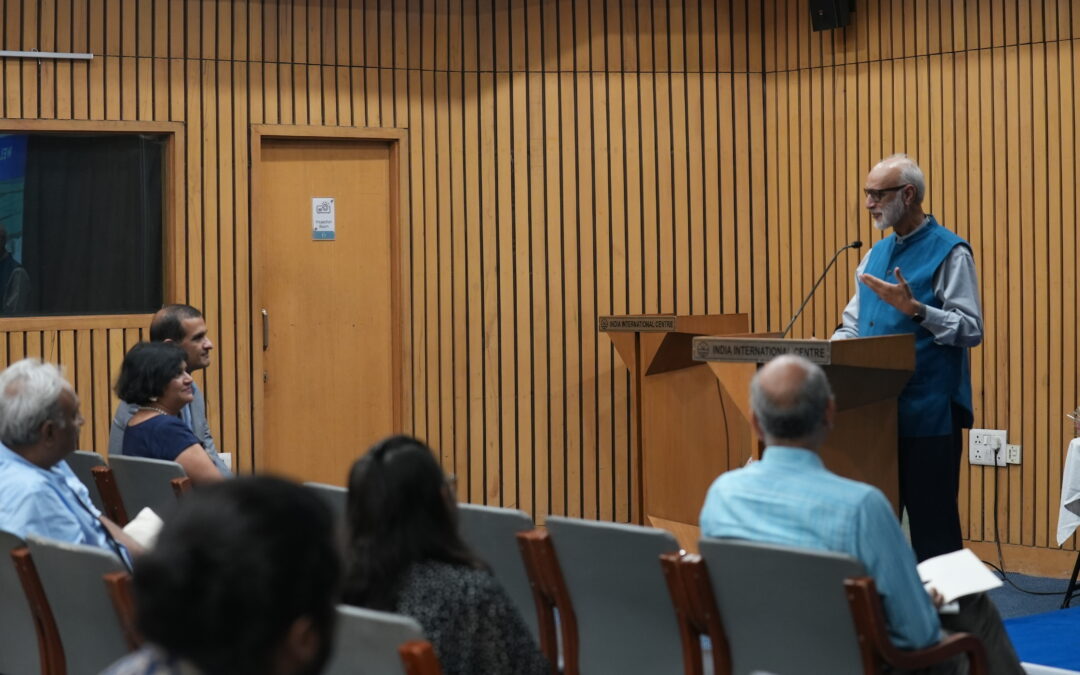
We Need More Agricultural R&D: Dr Ashok Gulati at WELL Labs Launch
Leading agricultural economist Dr. Ashok Gulati spoke about water use in agriculture and the need for innovative policies at the launch of WELL Labs, a new environmental research centre at IFMR.
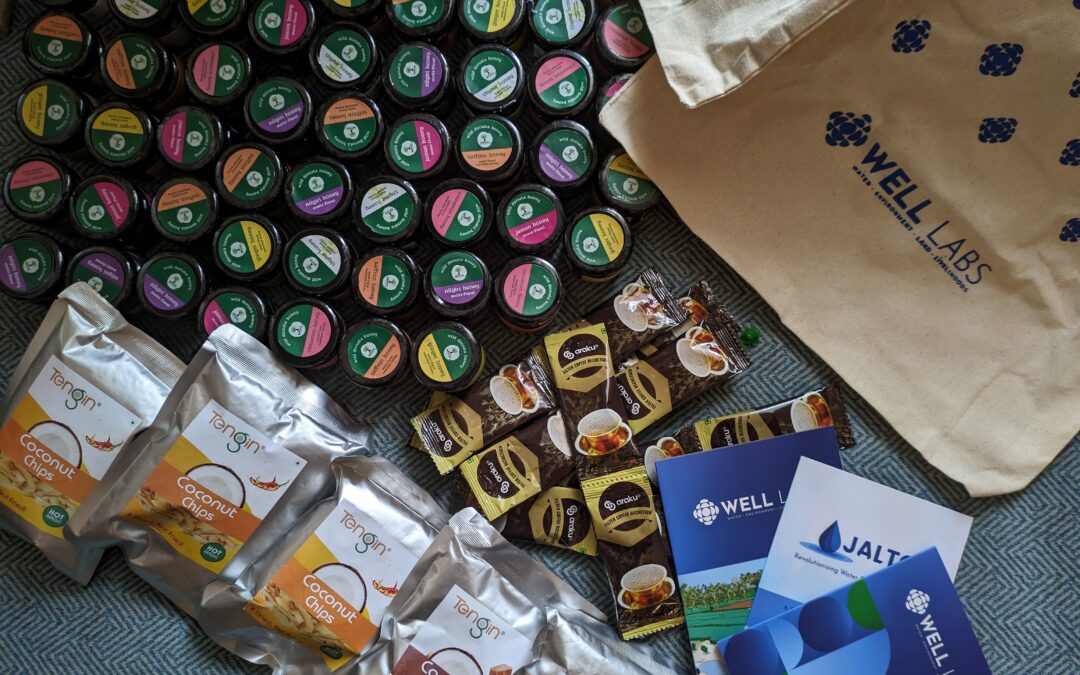
Coconut Chips to Wild Honey: When Consumers Demand, Food Producers Supply
The goodie bag we put together as part of our launch event in New Delhi is filled with examples of future food consumption pathways that might provide win-wins for people and the planet
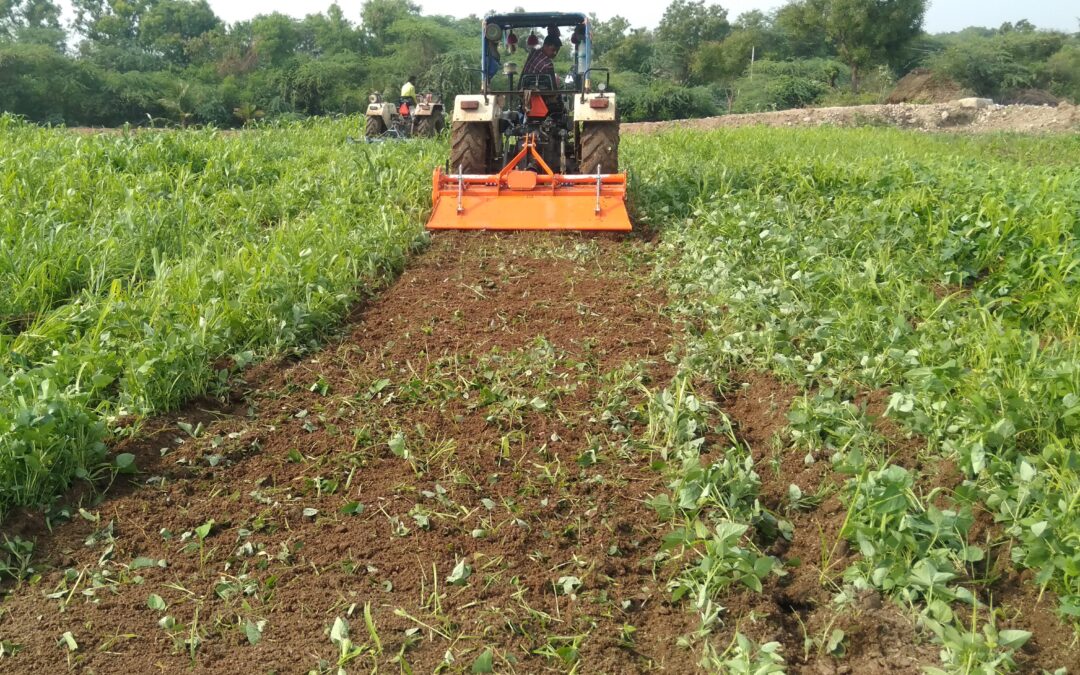
Explainer: How Green Manure Can Help Degraded Farmlands Sustain Themselves
The traditional agricultural practice of green leaves manure involves creating manure and fertiliser from natural, homegrown plants as sources of various nutrients for soil
In the Media


Tech is important, but trust is key when working with rural communities: Veena Srinivasan, Founder, WELL Labs
Published in The Indian Express
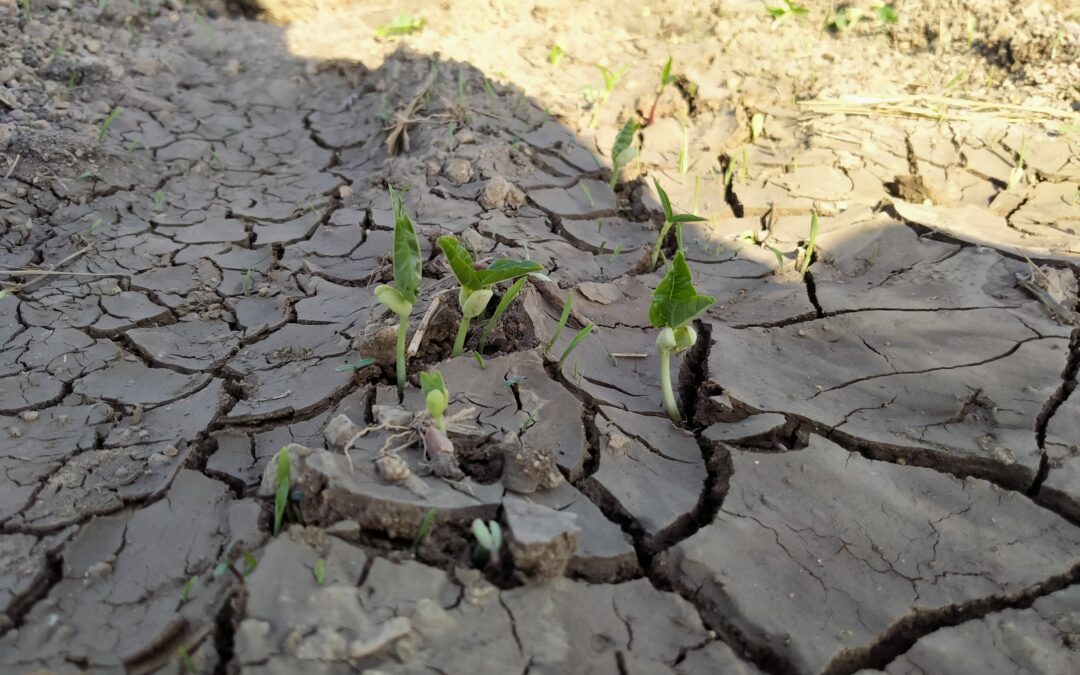
Farmers in India Are Weary of Politicians’ Lackluster Response to Their Climate-Driven Water Crisis
Published in The Associated Press
If you would like to collaborate with the Rural Futures programme or have any questions, reach out to us at welllabs.ruralfutures@ifmr.ac.in