
Himanshu Kulkarni and Indian Hydrogeology
In this episode of The Water Data Podcast, host Veena Srinivasan speaks with Dr. Himanshu Kulkarni, hydrogeologist and co-founder of ACWADAM, about groundwater science in India – from basalt aquifers and rural irrigation to springshed revival in the Himalayas and participatory groundwater management.
This episode was recorded in November 2025 on the sidelines of a two-day event celebrating the life and work of Dr. Himanshu Kulkarni, marking his recognition with the 2025 International Water Prize by the University of Oklahoma. Because the conversation was long and deeply insightful, we’re releasing it in two parts – this is Part 1.
In this episode, Dr. Kulkarni traces the origins of his groundwater journey – from early memories of the first wells and springs he encountered, to studying geology and being mentored by an exceptional hydrogeology teacher Vilasrao Salunkhe. He then takes us into his landmark field research in Pabal in rural Maharashtra, where detailed well surveys and long-term measurements revealed how basalt aquifers behave, why groundwater availability varies sharply across the same landscape, and how farming decisions around wells, pumps, and crops change when water availability and markets shift together. Along the way, the conversation unpacks key hydrogeology ideas in accessible ways, including layered basalt aquifers, heterogeneity, anisotropy, transmissivity, storage, and why some wells are productive only seasonally while others sustain longer.
Suggested Readings:
- ACWADAM
- Befriending aquifers – over a lifetime
- Celebrating the legacy and reflecting on the future of India’s groundwater
- Deolankar, S.B. (1980) The Deccan Basalts of Maharashtra, India—Their Potential as Aquifers. Ground Water, 18, 434-437. https://doi.org/10.1111/j.1745-6584.1980.tb03416.x
- Kulkarni, H. (1992). Delineation of shallow Deccan basaltic aquifers from Maharashtra using aerial photointerpretation. Journal of the Indian Society of Remote Sensing. https://doi.org/10.1007/BF02999209
- Kulkarni, Himanshu & S.B.Deolankar,. (1995). Hydrogeological Mapping in the Deccan Basalts – An Appraisal. Journal of the Geological Society of India. 46. 345-352. 10.13140/RG.2.2.32443.49449
- Kulkarni, Himanshu & Deolankar, S. & Lalwani, A. & Joseph, B. & Pawar, S.. (2000). Hydrogeological framework of the Deccan basalt groundwater systems, west-central India. Hydrogeology Journal. 8. 368-378. https://doi.org/10.1007/s100400000079
- Community Management of Groundwater Resources In Rural India: Research Report
- Tambe, S., Kharel, G., Arrawatia, M. L., Kulkarni, H., Mahamuni, K., et al. (2012). Reviving dying springs: Climate change adaptation experiments from the Sikkim Himalaya. Mountain Research and Development, 32(1), 62–72. https://doi.org/10.1659/MRD-JOURNAL-D-11-00079.1
- Kumar, M., Sen, S., Kulkarni, H., Badiger, S., Varma, G. R., & Krishnaswamy, J. (Year). Ecohydrological and hydrogeological dynamics of groundwater springs in Eastern Himalaya, India. Groundwater for Sustainable Development. https://doi.org/10.1016/j.gsd.2024.101311
- Shrestha, R., Desai, J., Mukherji, A., Dhakal, M., Kulkarni, H., & Acharya, S. (Year). Application of eight-step methodology for reviving springs and improving springshed management in the mid-hills of Nepal. International Centre for Integrated Mountain Development. 10.53055/ICIMOD.652
- Phadnis, Vinit & Srivastava, Gaurav & Patil, Siddharth & Joshi, Sampada. (2008). Study of Pondhe watershed area, Purandar taluka, Pune district, Maharashtra based on hydrogeological mapping through Field studies and geospatial techniques. https://doi.org/10.13140/RG.2.2.16672.79369
- Kulkarni, Himanshu & Aslekar, Uma & Joshi, Dhaval. (2018). Specific Yield of Unconfined Aquifers in Revisiting Efficiency of Groundwater Usage in Agricultural Systems. DOI:10.1007/978-981-10-4552-3_10
- Kulkarni, H., Lalwani, A. & Deolankar, S. Selection of Appropriate Pumping Systems for Bore Wells in The Deccan Basalt of India. HYJO 5, 75–81 (1997). https://doi.org/10.1007/s100400050258
- Pakhmode, Vijay & Kulkarni, Himanshu & Deolankar, S.B.. (2003). Hydrological-drainage analysis in watershed-programme planning: A case from the Deccan basalt, India. Hydrogeology Journal. 11. 595-604. DOI:10.1007/s10040-003-0279-z
- What are we allocating and who decides? Democratising understanding of groundwater and decisions for judicious allocations in India https://doi.org/10.2166/9781789062786_0173
- Kulkarni, H., & Shankar, P. S. V. (2009). Groundwater: Towards an Aquifer Management Framework . Economic and Political Weekly, 44(6), 13–17.
- Margreet Zwarteveen, Marcel Kuper, Cristian Olmos-Herrera, Muna Dajani, Jeltsje Kemerink-Seyoum, Cleaver Frances, Linnea Beckett, Flora Lu, Seema Kulkarni, Himanshu Kulkarni, Uma Aslekar, Lowe Börjeson, Andres Verzijl, Carolina Dominguez Guzmán, Maria Teresa Oré, Irene Leonardelli, Lisa Bossenbroek, Hind Ftouhi, Tavengwa Chitata, Tarik Hartani, Amine Saidani, Michelaina Johnson, Aysha Peterson, Sneha Bhat, Sachin Bhopal, Zakaria Kadiri, Rucha Deshmukh, Dhaval Joshi, Hans Komakech, Kerstin Joseph, Ebrania Mlimbila, Chris De Bont. Transformations to groundwater sustainability: from individuals and pumps to communities and aquifers, Current Opinion in Environmental Sustainability, Volume 49, 2021, Pages 88-97, ISSN 1877-3435, https://doi.org/10.1016/j.cosust.2021.03.004
- Himanshu Kulkarni, Mihir Shah, P.S. Vijay Shankar, Shaping the contours of groundwater governance in India, Journal of Hydrology: Regional Studies, Volume 4, Part A, 2015, Pages 172-192, ISSN 2214-5818, https://doi.org/10.1016/j.ejrh.2014.11.004
The Water Data Podcast is a talk show on the science, systems, and stories of water hosted by Veena Srinivasan.
Subscribe to the Water Data Podcast on Youtube, Apple Podcasts, Spotify, Amazon Music, Castbox, and wherever you get your podcasts! Drop us a note at welllabs.comms@ifmr.ac.in if you cannot find new episodes of the podcast on your favourite app.
Recording by Vedant Ambrule and Tippana Chaitanya
Video editing by Nabina Chakraborty
Graphics and artwork by Kanishka Goyal and Aparna Nambiar
Audio mixing and mastering by Vijay Doiphode
Podcast production and management by Nabina Chakraborty and Pavan Srinath
Follow us to stay updated about our work.
Related Posts
Related Posts
-
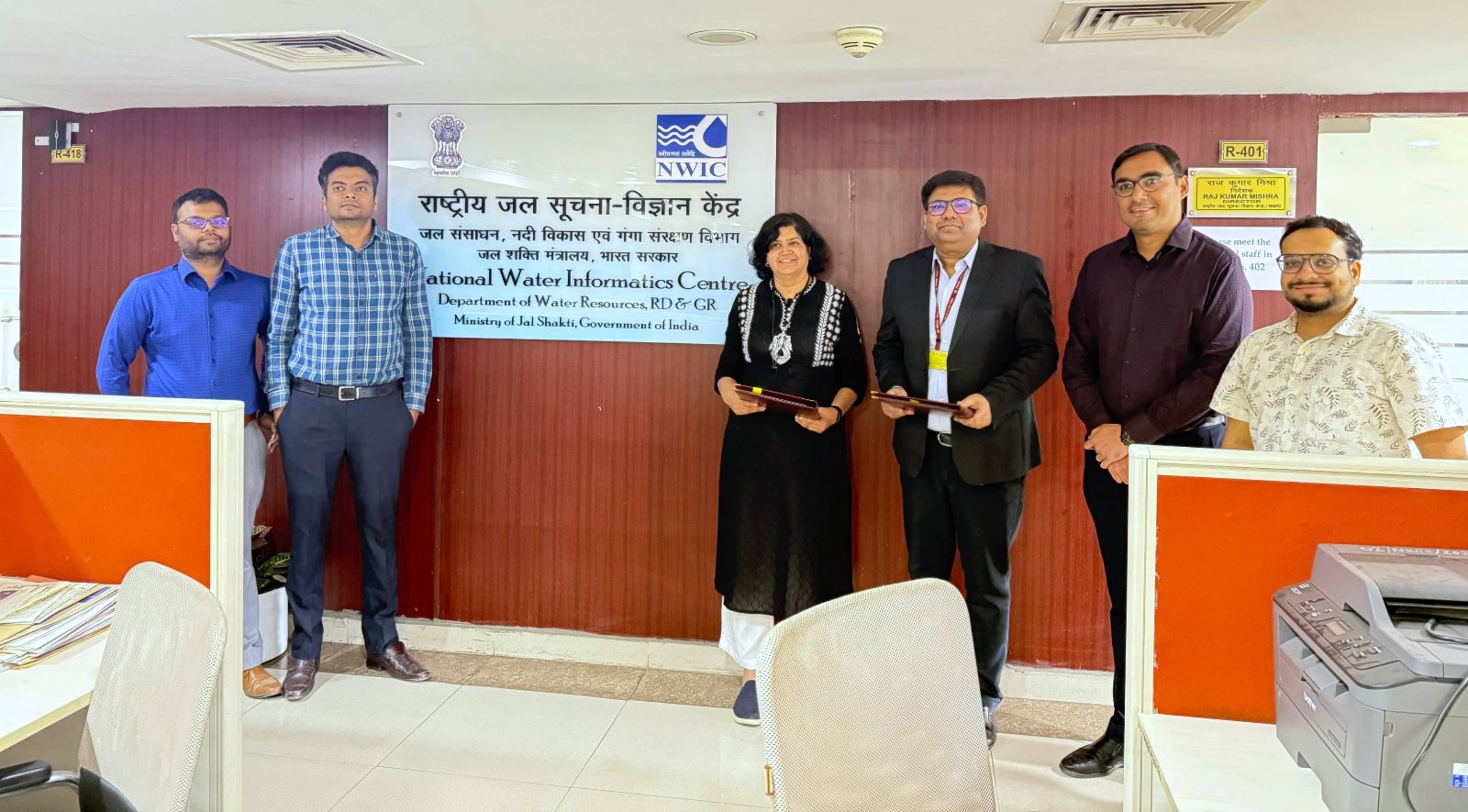
WELL Labs signs an MoU with the National Water Informatics Centre, Ministry of Jal Shakti
This partnership is a significant step toward enhancing water data ecosystem of India.
-

WELL Labs’ Values: Fostering Deep Empathy, Problem-First Thinking, and Scientific Excellence, Among Others
Learn more about the values the WELL Labs team aims for in its work of transforming water systems across India
-

Welcome Back to The Water Data Podcast!
The Water Data Podcast is a talk show on the science, systems, and stories of water hosted by Veena Srinivasan. Every other Tuesday, sit down and listen to researchers, innovators, government offic...
-
Governing Water Resources with Dr Somasekhar Rao
Dr Somasekhar Rao has a wide-ranging discussion with host Veena Srinivasan on the first episode of Season 2 of the Water Data Podcast.
-
Groundwater and Markets with Dr Soumya Balasubramanya
Dr Soumya Balasubramanya has a wide-ranging discussion with host Veena Srinivasan on the second episode of Season 2 of the Water Data Podcast.
-
Flood Science and Management with Dr Günter Blöschl
Stockholm Water Prize 2025 winner Dr Guenter Bloeschl shares a masterclass on the science and management of floods on the third episode of Season 2 of the Water Data Podcast