Staying Mission-Oriented in a Project-Funded World
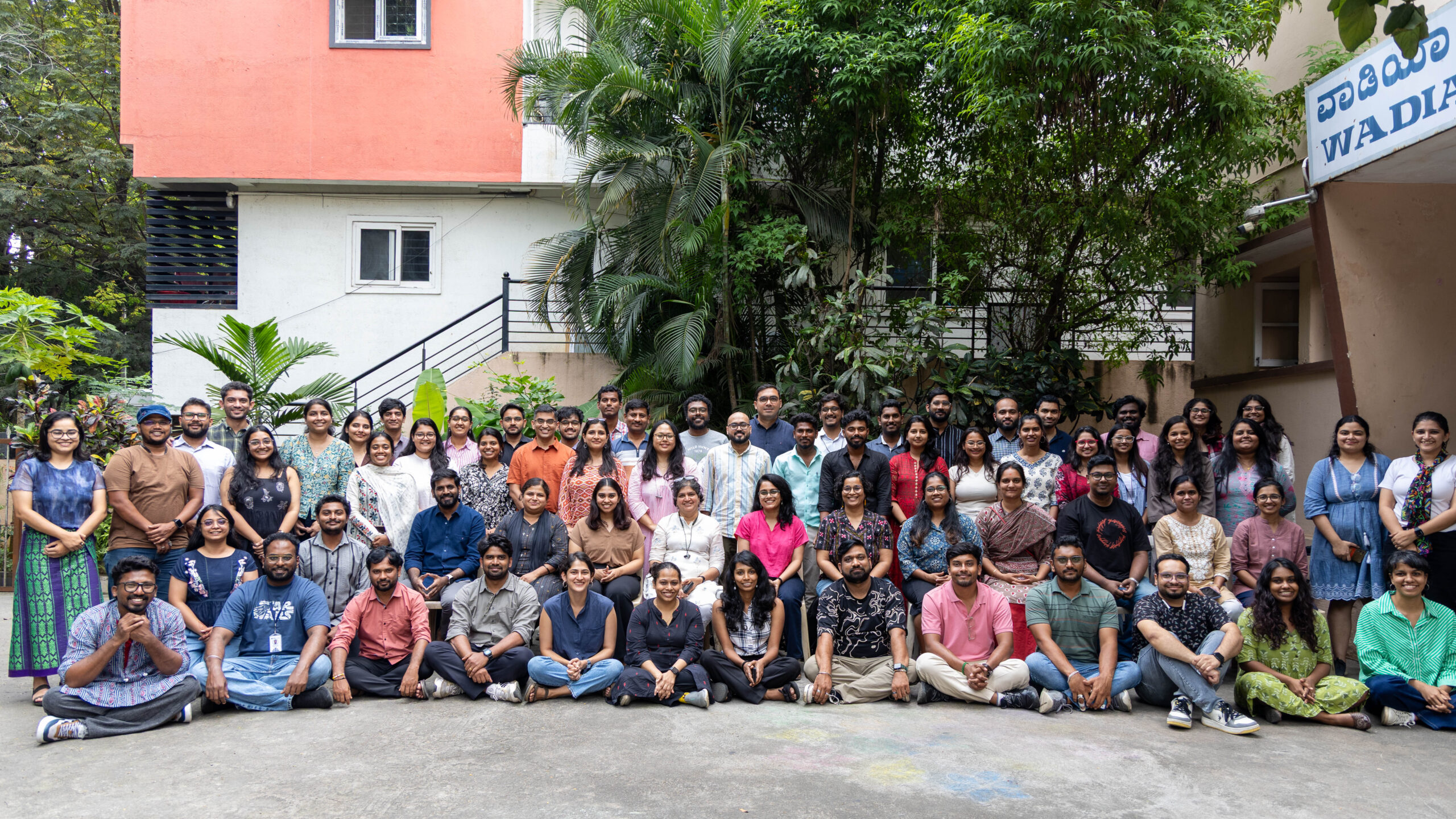
The WELL Labs Team
Over the years, many have reached out to ask about norms and best practices. We are still a young organisation. Much of what I have learnt is from trial and error. But given that there are relatively few ‘systems transformation’ organisations, I felt it was worth putting out.
WELL Labs is a water systems transformation organisation
First, let’s remember what non-profits are supposed to do. A lot of people don’t understand why non-market and non-government players even exist. I argue that non-profits:
- Bring stakeholders together to solve shared problems that no one has a financial reason to fix on their own
- Address information asymmetry and the capacity of vulnerable communities to approach markets and governments from a position of strength
- Overcome coordination problems between government agencies and across the government-business-civil society interface
- De-risk innovation via pilots by bringing in philanthropic capital
- Fill gaps in government technical capacity in the pre-tender phase
Because of the types of problems they solve and the diffuse nature of their beneficiaries, non-profits are typically philanthropically funded. This poses unique challenges in management – we are funded by small, specific, time-bound projects, but are expected to move mountains. It is very difficult to stay mission-oriented when funding is uncertain and intermittent.
We set big, hairy, audacious goals and roadmaps
Our work at WELL Labs is structured around audacious goals that we have carefully chosen and are based on maximising our chance of success.
For each goal, we have one or more theses – the story we use to describe what the lock-ins are and why we believe the systemic goal is achievable. Most of our theses offer a ‘win-win’ opportunity and are underpinned by positive trends, signals, and political will. For each thesis, we articulate why we believe it has a strong likelihood of delivering meaningful impact within 10 years. This belief is grounded in prior case studies, empirical data, expert insights, and user research, which collectively inform our confidence level.
Each thesis is associated with a roadmap. This includes a set of outcomes or milestones that lay out how the goal will be achieved. We recognise that systems change involves moving many actors, many of whom are outside our sphere of control. Therefore, each outcome is associated with a hypothesis or theory of change – on explanation of why we believe the activities and outputs we generate will result in the desired outcome.
Thus, WELL Labs engages in public problem-solving by democratising data and science to empower changemakers.
Each project we do tests one or more ‘hypotheses’ in the larger theory of change
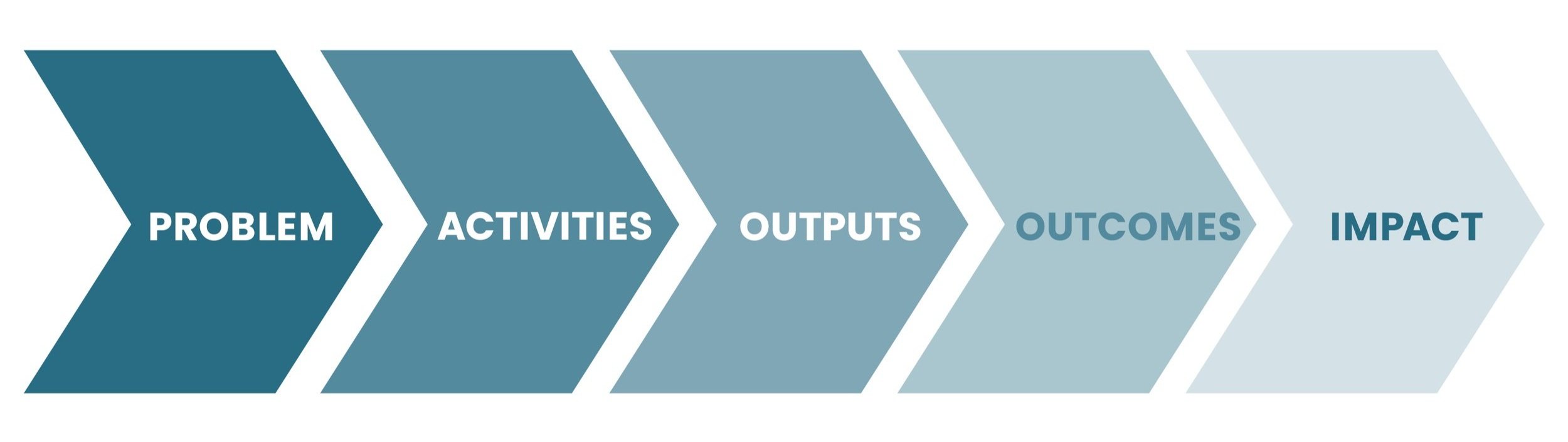
Our theory of change focuses on mapping the relationship between what we do at WELL Labs and how our activities lead to achieving the desired goals. For each goal (desired impact), we determine the outcomes to be achieved, the outputs to be produced, and the activities to be undertaken.
Activities and outputs are within our control, but outcomes and impacts are not. The best we can do is hypothesise: ‘If we do X and generate Y output, it will result in Z outcome – and outcomes from other organisations’ efforts – resulting in desired Impact I’.
For each thesis, we work back from the desired impact to lay out what needs to occur for it to eventualise. We do not have 100% certainty on this causal chain; it is merely a ‘theory’ represented by hypotheses on why we think our actions will lead to the expected outcomes. Typically, a given hypothesis will take a few months to two years to pan out. If a hypothesis fails, we abandon it and formulate a new one.
Meanwhile, we track interim metrics – systemic outcomes in the short- and medium-term that indicate that the system itself is moving in the right direction. Typically, the interim metrics will be the result of our own work, as well as of other actors, such as the government or corporations. We fully recognise that we cannot act alone.
The whole point of recognising the theory of change as a series of hypotheses is that it makes clear that success is not guaranteed. And if our hypothesis is not panning out, we abandon it.
It is key to match donors by risk appetite
One way we stay mission-oriented is by pursuing each hypothesis as a project. Each year, we raise funding for specific projects from philanthropic and CSR donors. In our internal planning, every proposal is for a specific hypothesis and forms part of a larger, more ambitious impact roadmap. In practice, we realise that some deviation from the plan to accommodate donor or grant-specific guidelines is necessary and part of the game. But we typically do not allow programmes to deviate significantly.
Importantly, we do not submit proposals for projects that are outside the annual strategy, and lack strong underpinning hypotheses. We do not ‘spray and pray’ proposals vaguely related to the field of water resources. Of course, this requires us to have at least some unrestricted or flexible funding, or at least funding that is outcome oriented.
In general, there are two types of donors:
- Corporate social responsibility (CSR) donors tend to fund low-risk projects. They have a low appetite for failure. For such donors, we propose projects that have a good ‘prior’ probability of success. Such projects are not necessarily innovative, but rather, they are solid and dependable. The hypothesis should be proven; either the literature or another organisation should have successfully used a similar approach. But on the flip side, CSR donors usually care only about outputs, not long-term outcomes. While they may not like to advertise failure, they usually don’t stay engaged long enough to check if the needle moved on the ground.
- Philanthropic donors tend to fund high-risk, innovative projects. They have a tolerable appetite for failure and care about outcomes. Often, they are willing to allow us to test different approaches and to have a less-constrained ‘log frame’. So we have to find philanthropic funding for less tried-and-tested hypotheses.
The hypotheses and roadmap have to be revisited periodically
By definition, hypotheses are uncertain, although some may be more uncertain than others. Once we have written out our hypotheses and theory of change as objectives and key results, we have to revisit them regularly.
So each quarter, we conduct in-depth reviews of how each team is doing. It’s when we shift the focus from routine delivery of project outputs to questioning the hypotheses and theory of change. Basically, we ask: have we produced the outputs and conducted the activities we said we would? Are they moving the needle on the outcome as we expected? What makes us think that, if we continue, we will achieve the outcome milestones?
If we judge that something is not working (sometimes we have the wrong employee in the wrong job, in which case the problem is internal), then we have to give up because it is either just bad timing, a key champion in government has left, or political winds have shifted.
While we try really hard to pick big bets where we think we can succeed, sometimes we just fail. The key is to document how and why we failed, and move on.
Acknowledgements
Authored by Veena Srinivasan
This blog was first published here.
Follow us to stay updated about our work
Related Posts
Related Posts
-
WELL Labs Launch Event Proceedings: Research and Innovation for an Uncertain Future
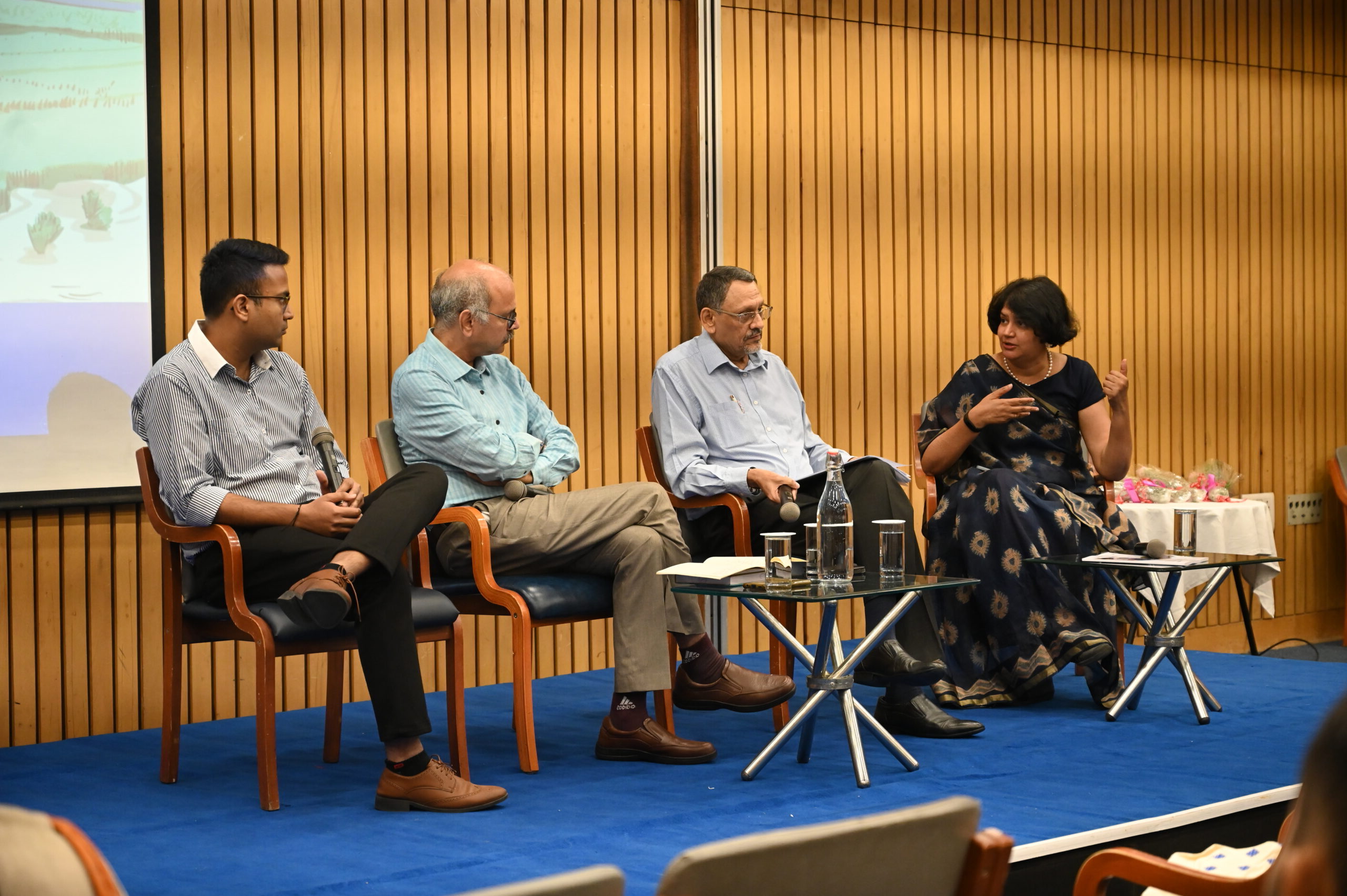
Water, Environment, Land and Livelihoods (WELL) Labs was formally launched on July 26, 2023, at the India International Centre in New Delhi. This document summarises the keynote lecture and the pan...
-

Reflections on WELL Labs’ Journey: Year in Review and the Path Ahead
How do we solve environmental and social challenges at a large scale? We identified four challenges the social impact sector needs to address.
-

How WELL Labs Is Using Systems Transformation to Solve Complex Water Challenges in India
Water challenges are multi-faceted and involve zero-sum games. Addressing them requires a structural shift in how interconnected economic, social, and ecological systems function
-
Empowering Local Decisions with Isotope Hydrology: A New Frontier for India’s Water Strategy
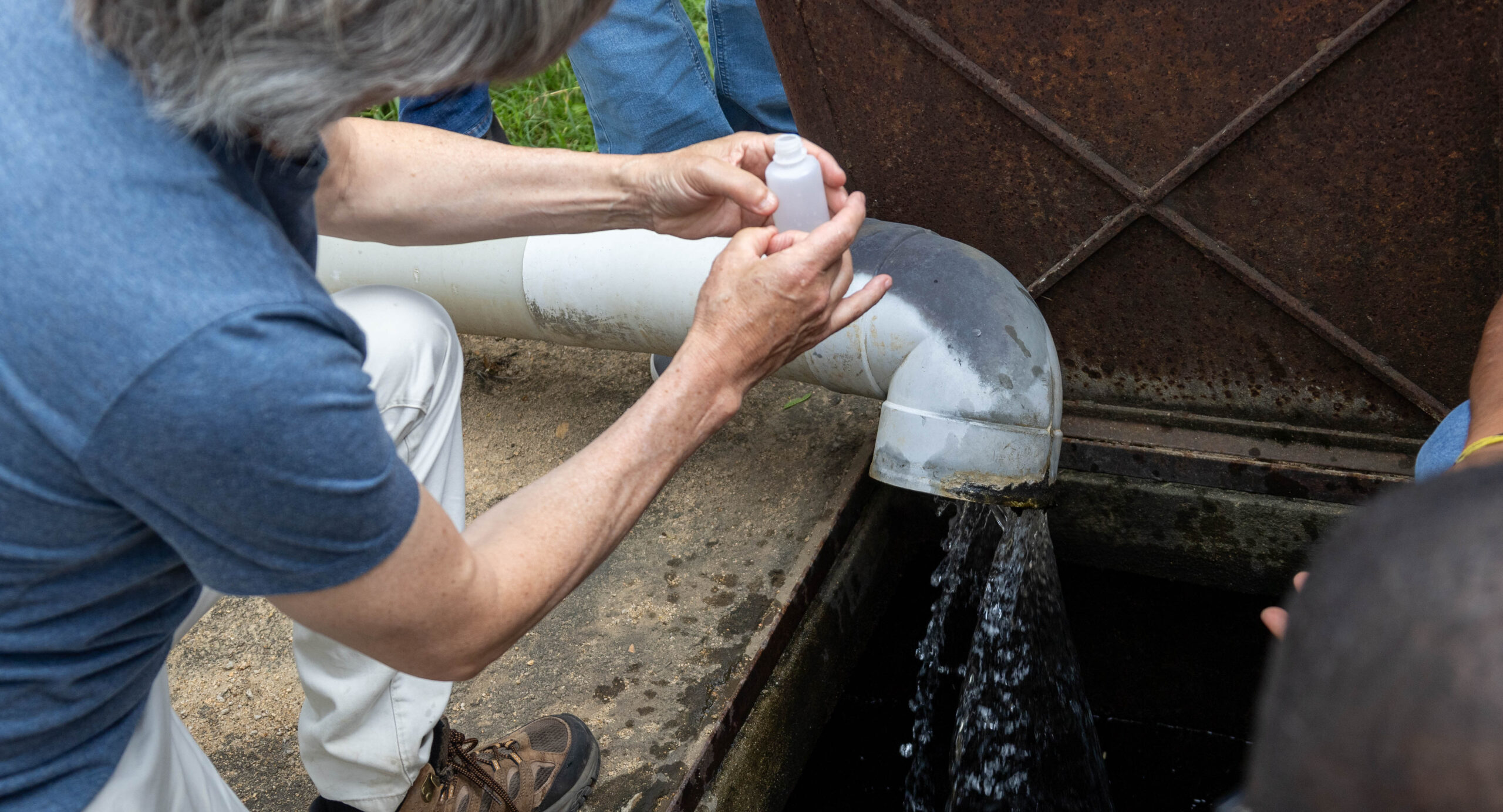
Upscaling isotope hydrological techniques in water resources management through government policies can help address water challenges in urban and rural India
-
Staying Mission-Oriented in a Project-Funded World
WELL Labs is three years old. Veena Srinivasan, our Executive Director, writes about the journey, and what we have learnt from it in a series of blogs. This is part one of seven.
-

Matching External Commitments to Internal Accountability
In part two of this seven-part series on learnings from three years of running WELL Labs, Veena Srinivasan shares how the organisation stays accountable.