
Three Years of Designing Water Resilience
Building water security is not merely a technical puzzle; it is about understanding and reweaving the social and institutional fabrics on which it is built | Illustration by Sarayu Neelkanthan
Three years ago, the Urban Water programme at WELL Labs set out to answer one question: How can we build water-secure and water-resilient cities?
These three years have taught us that building water security is not merely a technical puzzle; it is about understanding and reweaving the social and institutional fabrics on which it is built. We’ve learned that data is only as powerful as the trust behind it, and that true innovation doesn’t happen in a lab. It happens in the messy, vibrant intersections of policy and regulations, community, innovation, and the environment. Most importantly, we’ve understood that for a city to be truly resilient, the ‘ecosystem’ must be inclusive, encompassing everyone, from the apartment resident to the state official.
We’ve approached our Urban Water programme like a design lab. First, we understand the system. Then, we imagine what it can become. Finally, we build what works.
Year 1 – What Is
Before you fix a system, you must understand it.
We identified two primary gaps in the water system. First, there is a lack of comprehensive understanding about how water flows in Bengaluru. And second, a data-driven case for diversifying water sources is missing. Specifically, we needed to determine the ideal mix of resources to improve the city’s water resilience; for example, the proportions of demand that can be met by rainwater harvesting versus treated used water. To fill these gaps, we published the Bengaluru Urban Water Balance Report, the first comprehensive account of how water moves through the city. This became the definitive database for decision-makers.
The same year, we launched the WaterReuseLab with Eawag. We recognised that Bengaluru’s 4,000+ decentralised STPs could help offset a significant portion of groundwater usage. But by how much? Where? What blockers were inhibiting that potential from being realised? These questions remained unanswered. Unlocking these would offer insights into how the full potential of these systems could be achieved and whether they could potentially serve as a global model for megacities building security from the ground up.
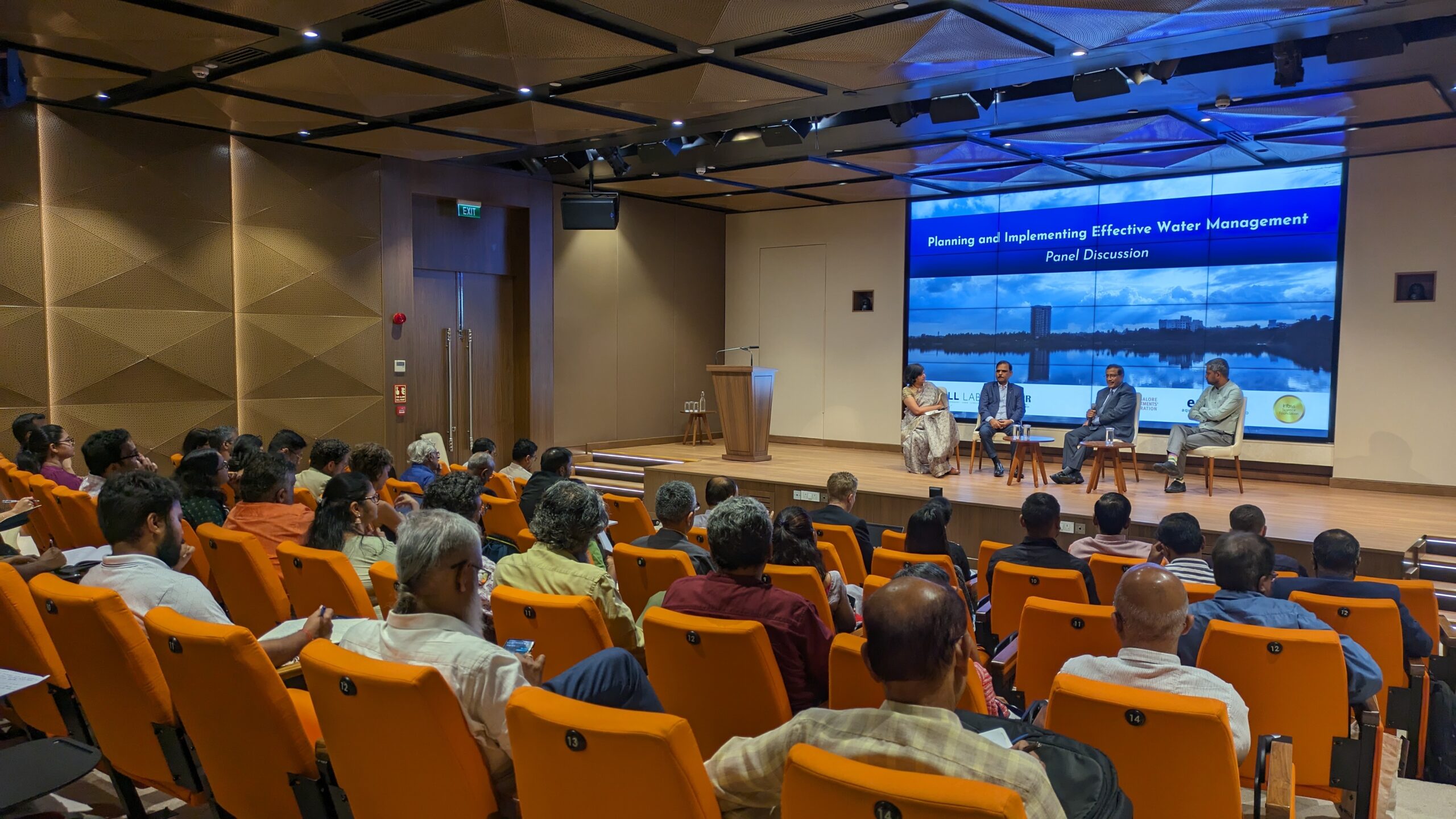
Bengaluru’s 4,000+ decentralised STPs can help offset a significant portion of groundwater usage
Year 2 – What If
Once you understand the system, you can reshape it.
As we moved from research to reality, we realised that none of this would be possible without the immense support and collective insights of our ecosystem partners. The conversations we had with every one of them shaped our core understanding: the Bangalore Apartments’ Federation, Biome Environmental Trust, CDD, and LVBL; innovators like FluxGen, Boson White Water, Greentivity Enviro Solutions, Genex Utility, Ecotech Engineering, and Tankerwala; officials from Karnataka State Pollution Control Board (KSPCB), Bengaluru Water Supply and Sewerage Board (BWSSB), and Environmental Management & Policy Research Institute (EMPRI); builders and developers like Brigade Group, Lodha Group, CoEvolve Estates, JLL, and CREDAI; experts from IIT Bombay, IIT Madras, and IISc; and so many more.
To us, this is our most valuable asset and our true measure of success: the collective intelligence of a community moving the needle on treated used water reuse in Bengaluru. We forged a partnership with Eawag to strengthen this ecosystem and gather more data together to drive impact on the ground. Here are some of our achievements in Year 2:
Policy Change: Our partnership with Eawag and the Bangalore Apartments’ Federation influenced state-level policy on water reuse, recognising the off-site reuse from apartment STPs as crucial to boosting treated used water reuse in the city.
Adopted Frameworks: We developed the first draft of a lake rejuvenation framework along with Friends of Lakes, which now has more than 30 institutional partners and countless individual contributors who have actively shaped it, making it much more robust than any one single institution could have. As a result, the framework has been adopted by the Bengaluru Climate Action Cell.
Market Reality: We partnered with the Bill & Melinda Gates Foundation to map how decentralised sanitation technology can move from ‘possibility’ to ‘market reality’.
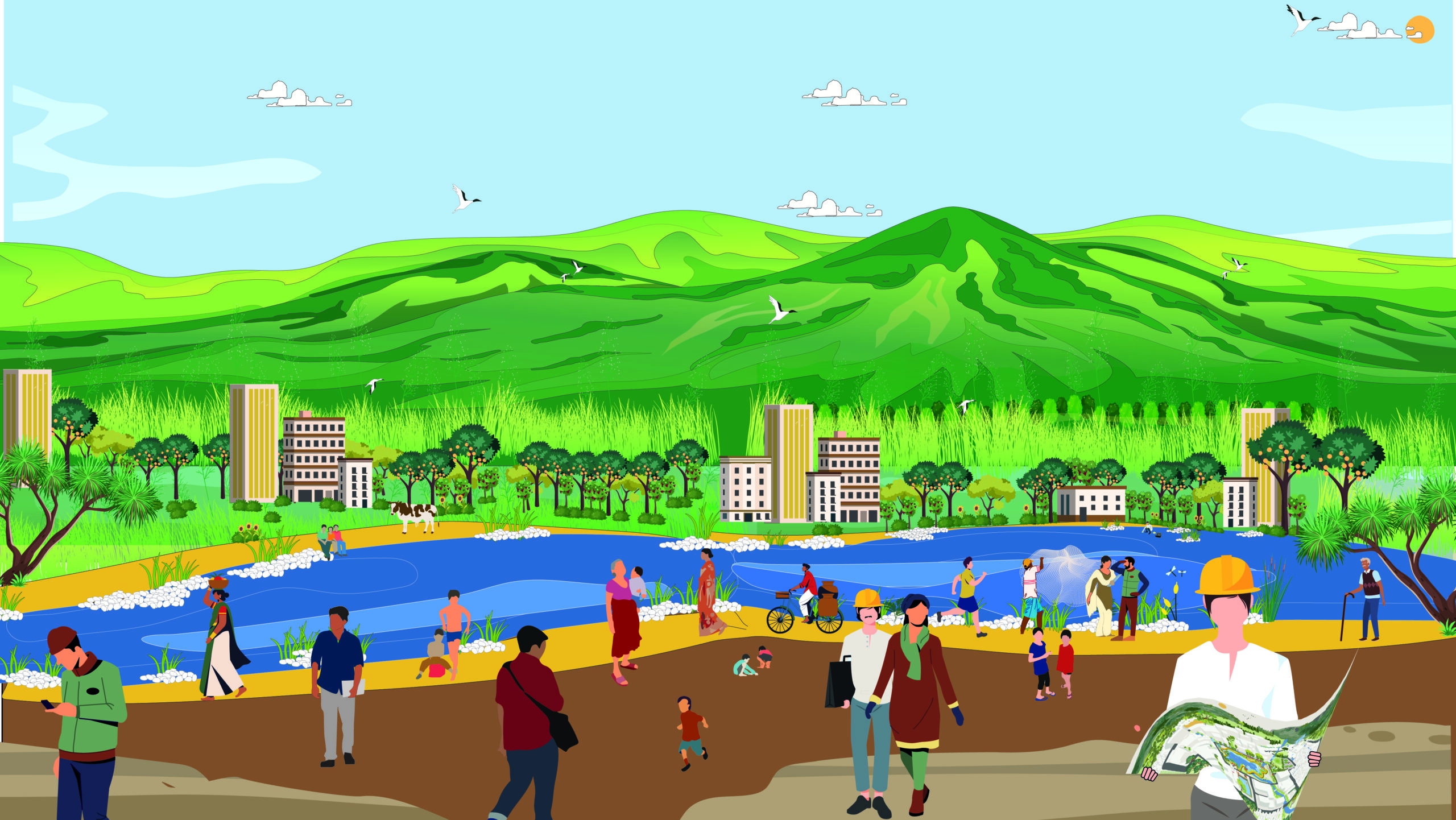
The lakes framework has been adopted by the Bengaluru Climate Action Cell | Illustration by Anam Husain
Year 3 – What Works
Once you’ve reimagined the system, you build.
This year was about institutionalising change.
Systemic Intervention: We signed MoUs with Karnataka State Disaster Management Centre (KSDMC), Greater Bengaluru Authority (GBA), and BWSSB to shape how major disaster mitigation investments are implemented from within.
We’ve also anchored discussions around building a coalition for water reuse in the city.
Implementing Nature-based Solutions: Together with Rocky Mountain Institute (RMI), we co-developed actionable pathways for expanding Nature-based Solutions across city scales. We are now piloting solutions across the city to demonstrate how they can be designed and how the city can reap tangible benefits.
Digital Tools: Together with Mercedes-Benz Research and Development India Private Limited (MBRDI), we’re building Solutions Explorer, a platform that can help funders and cities pick the right Nature-based interventions.
Year 4 – What Next
As we step into our fourth year, we are broadening our lens. A core part of our ethos at WELL Labs is transforming the way resilience is built; moving away from reactive fixes toward systemic transformation at scale. This is a massive challenge that requires deep institutional integration. Through our valuable engagements and MoUs with KSNDMC, GBA, and BWSSB, and by building coalitions with partners in the system, we hope to achieve this fundamental shift in how the city manages its water during extremes.
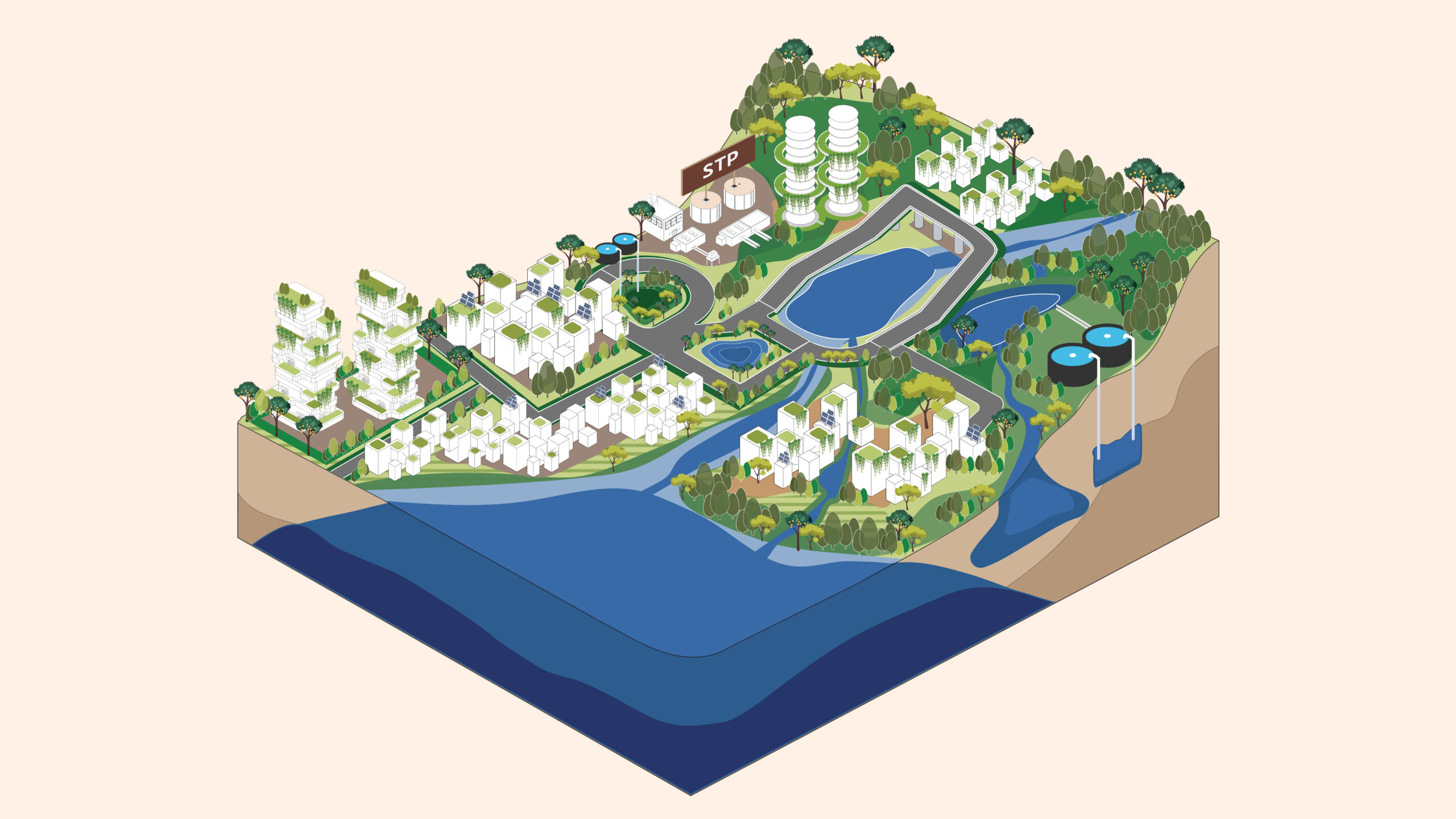
We are now piloting nature-based solutions across the city | Illustration by Anam Husain
A New Phase of Leadership
The gap between starting up and scaling is a new design problem. As we enter Year 4, the programme is evolving alongside its leadership.
Shreya Nath, who drove the Urban Water programme from its inception through its foundational ‘0 to 3’ growth, has transitioned out as she has moved to the US. Gayathri Muraleedharan, who has been a core pillar of the team since Year 2, took on the role of co-lead last September and is now leading the programme into its next chapter of implementation.
The question that started this programme is bigger than any three-year arc. But the foundations are in place.
We’re grateful to be working in an organisation where this kind of work is not only possible but expected.
Happy 3rd birthday, WELL Labs!
Acknowledgements
Authored by Shreya Nath and Gayathri Muraleedharan
Edited by Apuurva Sridharan
Published by Nanditha Gogate
Follow us and stay updated about our work:
Related Posts
-
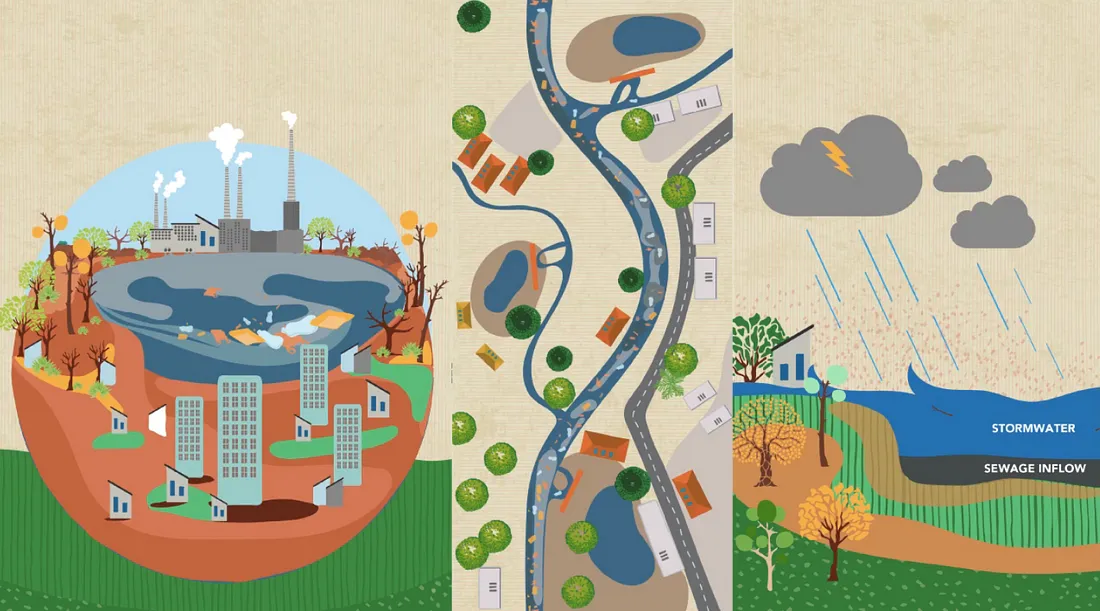
Why We Need Urban Water Balances
We explain the need to better understand how water moves through cities and illustrate effective ways to visualise urban water balances.
-
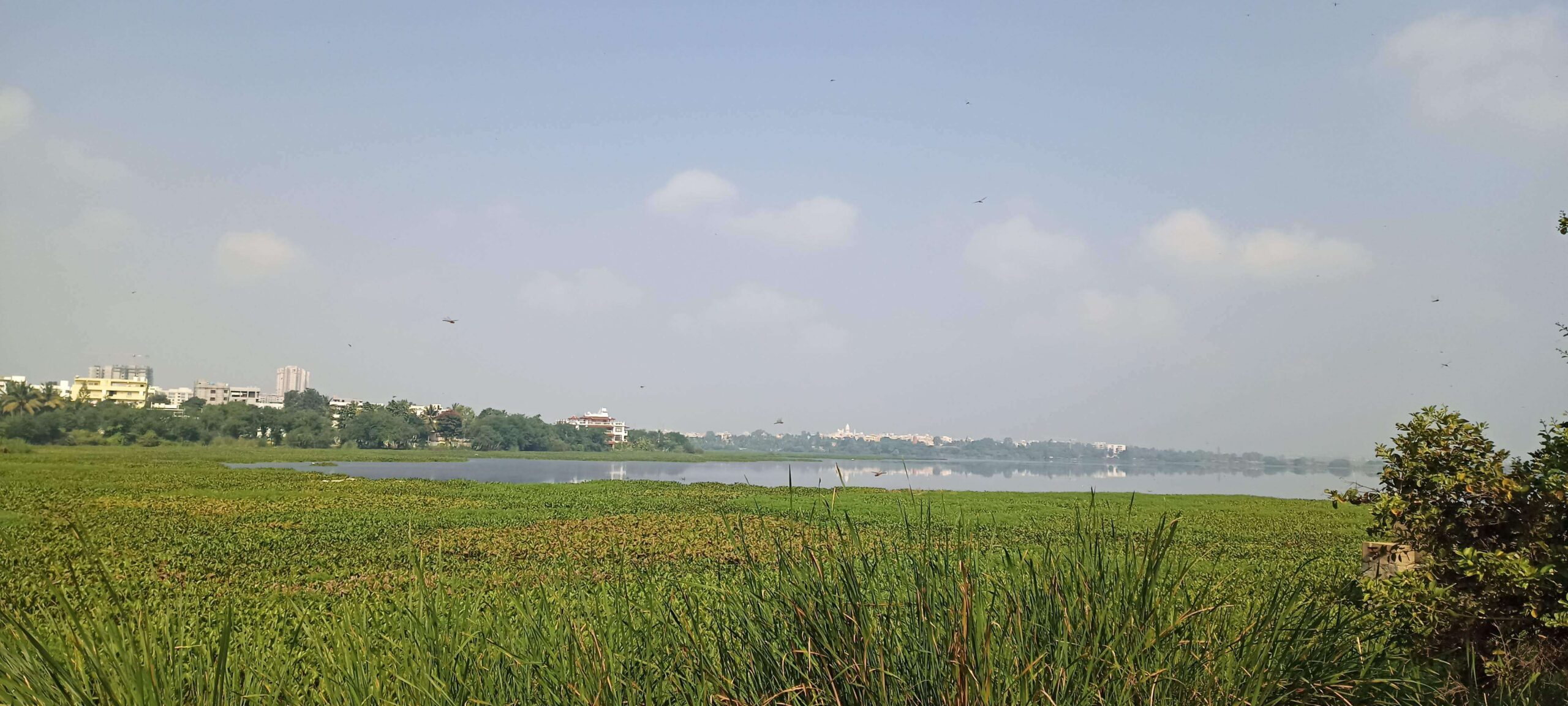
Setting the Context — Water Governance in Bengaluru
In this series, we explain the need to better understand how water moves through cities and illustrate effective ways to create and visualise urban water balance through the case of Bengaluru.
-
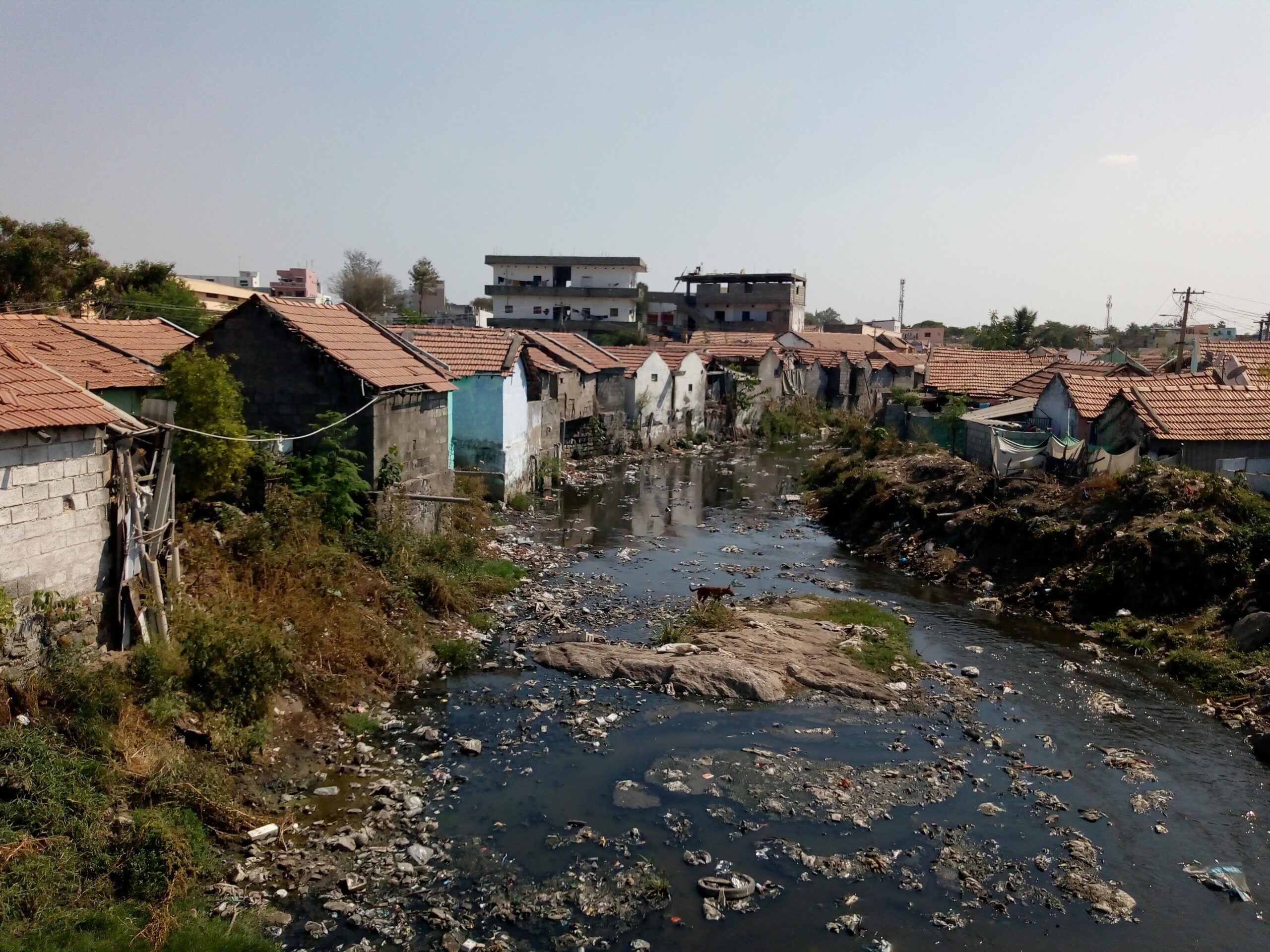
Understanding Wastewater Reuse: 5 Learnings from the IWA International Conference
Our Urban Water team sums up five key learnings on wastewater treatment and reuse from the five-day IWA conference held in Chennai in January 2023.
-
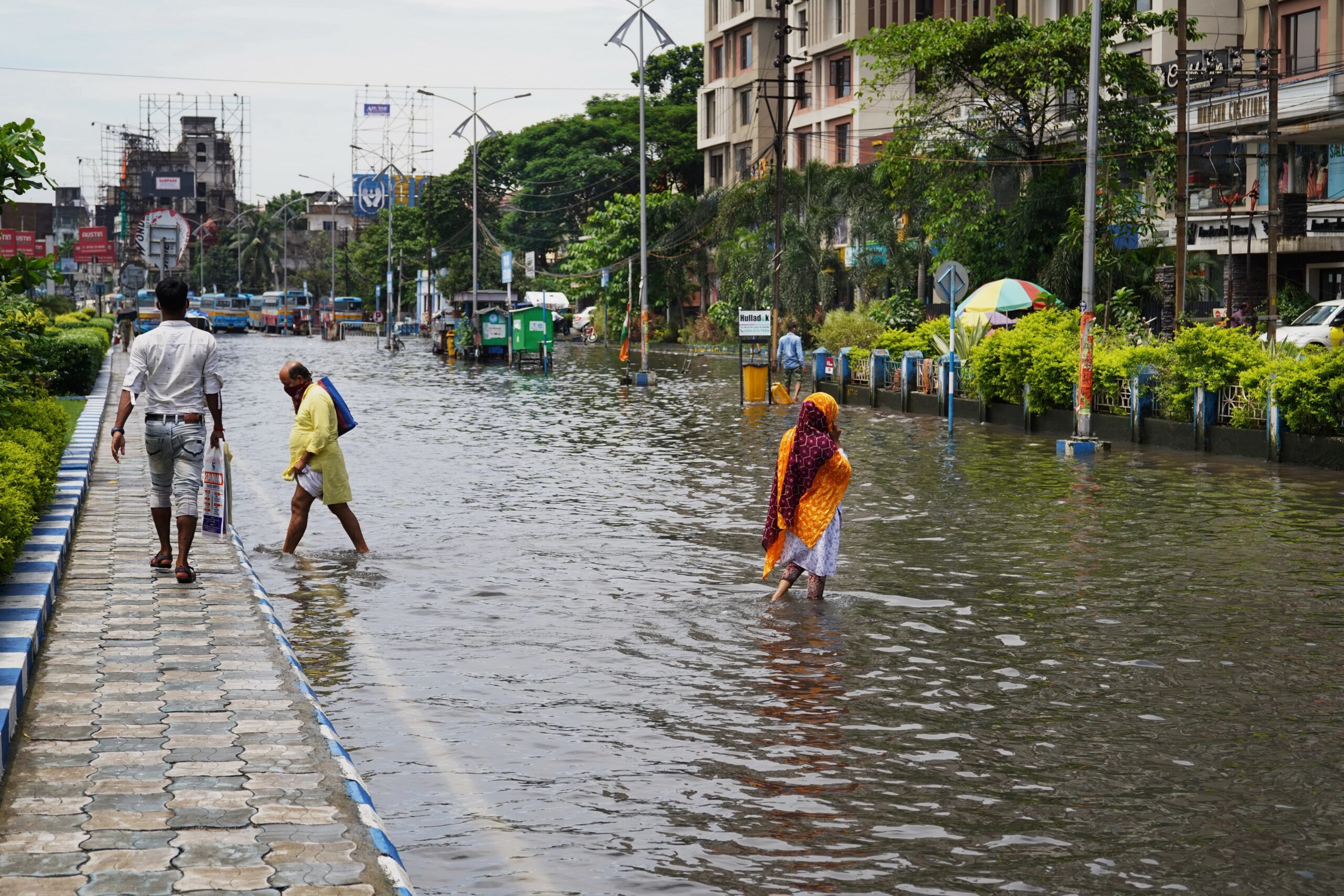
Soak Up the Rain: How a ‘Sponge City’ Makes Urban Areas Climate Resilient
In Part 1 of this blog series, we introduce the concept of sponge cities and how this Nature-based Solution has become a popular flood mitigation strategy.
-

A Visionary Architect and a New Growth Model: What’s Behind the Rise of Sponge Cities in China?
In Part 2 of this blog series, we delve into how one man’s vision and coupled with reforms by the Chinese government led to the nationwide adoption of nature-based solutions to manage floods.
-
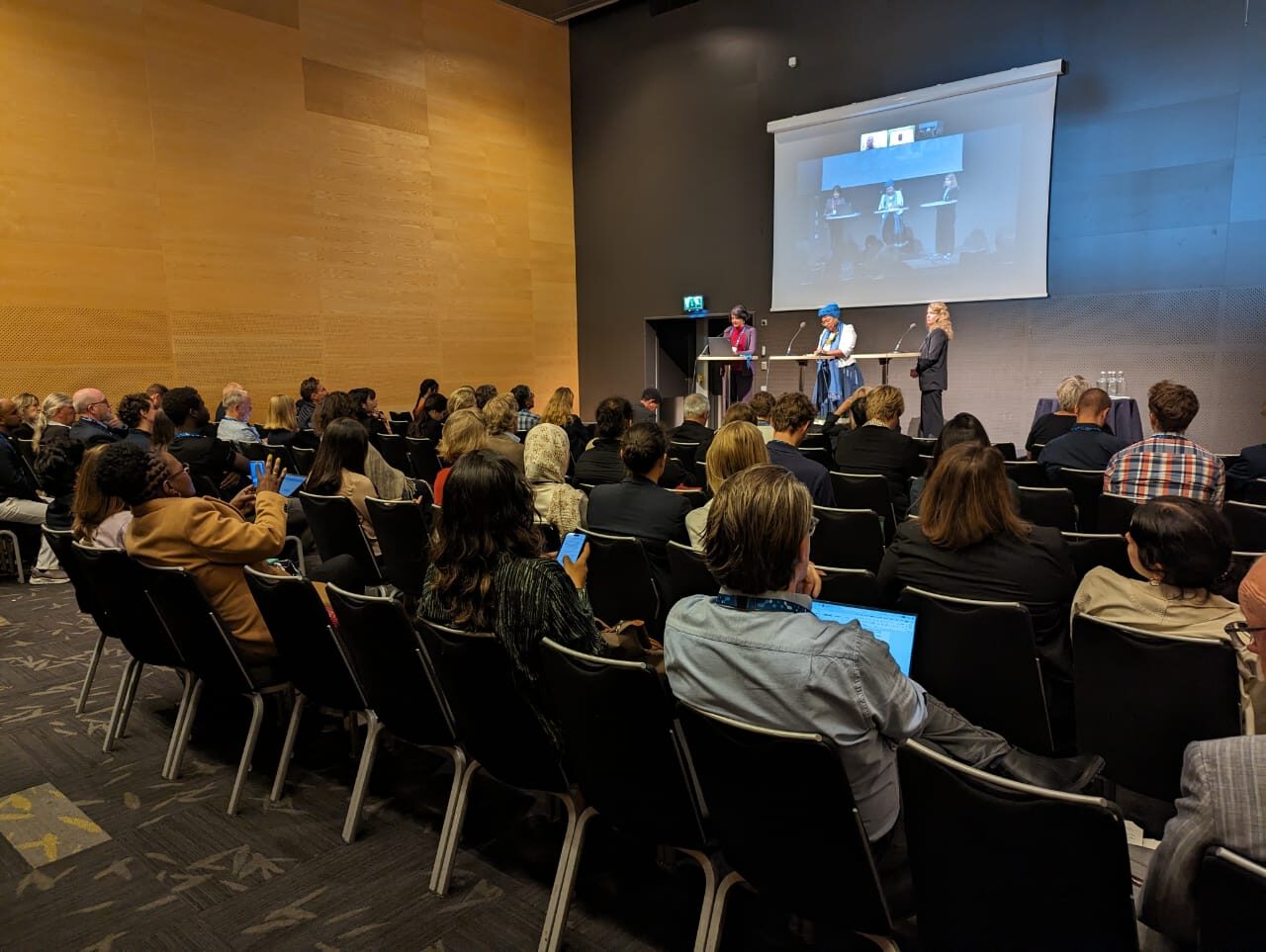
Beyond the Jargon: 10 Key Takeaways from World Water Week 2023
WELL Labs Executive Director, Dr. Veena Srinivasan, led sessions on water and agriculture at World Water Week 2023, an annual event on global water issues organised by the Stockholm International W...